November 30th, 2025 . Posted in Japan | Comments Off on Japan – October 2025
Jeff and I recently returned from a wonderful adventure to Japan. It was an “adventure” because we took a 15-day cruise across the Pacific Ocean and spent eleven days in Tokyo. Then we boarded another ship to cruise for 9-days around Honshu, the largest island of Japan, before flying home.
Seattle, Washington
Our journey began on Saturday September 27th in Seattle Washington, a city we last visited in 2012. We flew there a day early to avoid any flight delays before our cruise and to see the city again.
Waterfront Pathway
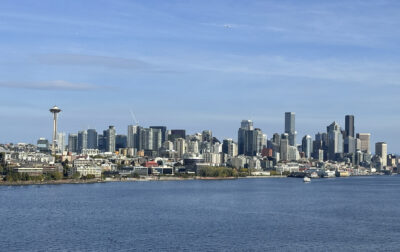
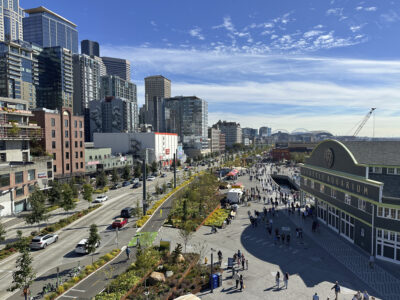
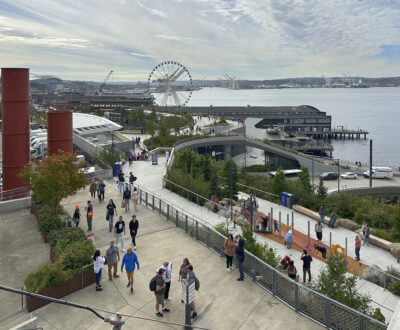
The beautiful waterfront has been developed and improved with a new Overlook Walk connecting Pike Place Market to the Seattle Aquarium. The Waterfront Pathway is a four mile long trail along Puget Sound where people can walk, jog, or bicycle with gorgeous views across the bay.
The Overlook Walk
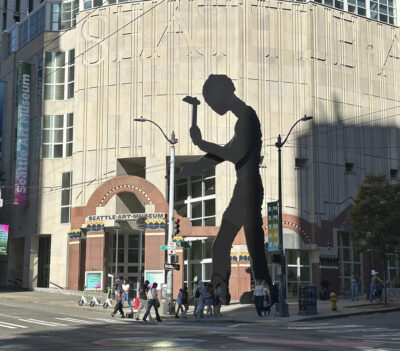
We visited the Art Museum and walked all over downtown Seattle. The city has many new tall modern buildings and there have been great improvements since our last visit.
Seattle Art Museum
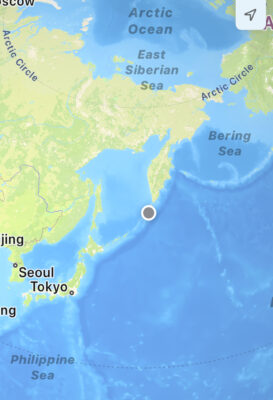
We boarded the Discovery Princess on Sunday September 28th to begin a 15-Day re-positioning cruise across the Pacific Ocean. The ship sailed north to Alaska, then followed the shoreline of the Aleutian Islands, across the Bering Sea, and then southward to Japan.
Ketchikan, Alaska
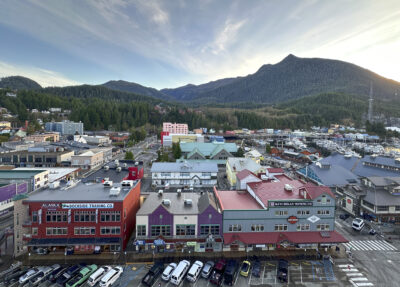
Our first port of call was Ketchikan, Alaska on the Inside Passage. This was our second visit to Ketchikan and both times we were very lucky to have sunny weather. Ketchikan is the “Rain Capital of Alaska” with an average of 12.5 feet of rain per year.
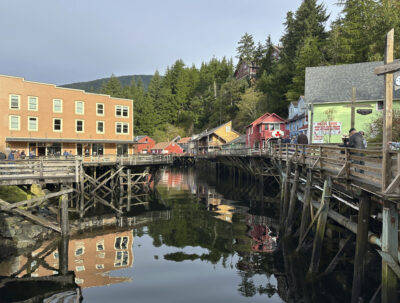
Creek Street
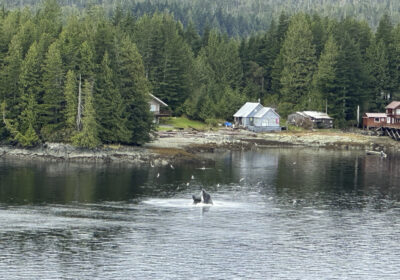
It’s a lovely community of friendly people and interesting shops. We had fun exploring the wooden walkway of Creek Street and watching the harbor seals in the water. From the ship, we watched a whale surface in the bay to catch fish. A flock of sea gulls followed.
A Whale Surfacing
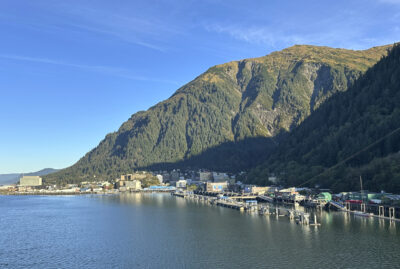
Our next port was the Alaskan capital of Juneau. There are no roads leading into the city. The only access is by sea or air.
Juneau, Alaska
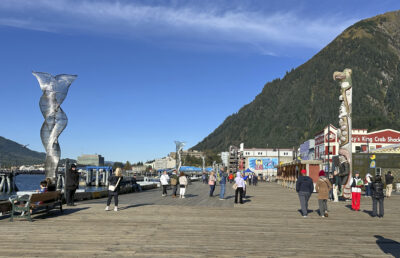
The ship docked near the center of town and we strolled along the waterfront boardwalk lined with totem poles. Juneau is a small city with government buildings, tourist shops, restaurants, and a museum.
Waterfront Walkway
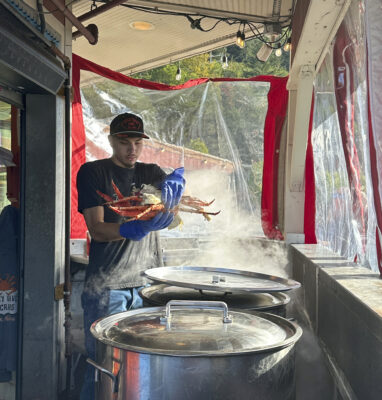
We looked in at Tracy’s King Crab Shack where they were steaming huge king crab legs for hungry cruise ship passengers.
Steaming King Crabs
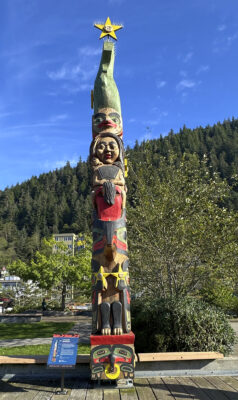
The boardwalk is called the Kooteeyaa Deiyi Totem Pole Trail featuring unique poles which represent different clans and celebrate the history, identity, and living traditions of Alaska’s Indigenous peoples.
Totem Pole
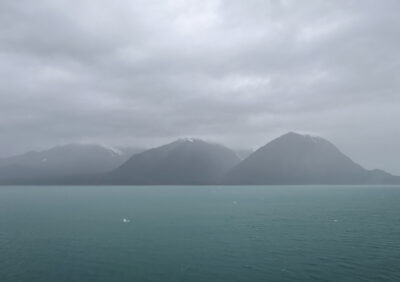
On October 2nd the Discovery Princess cruised past Hubbard Glacier in Yakutat Bay. This is a common Alaskan Cruise event and an awe-inspiring experience. As you approach the glacier, the water in the bay is a bright greenish color and icebergs become more numerous.
Snow on the Mountains in Yakutat Bay
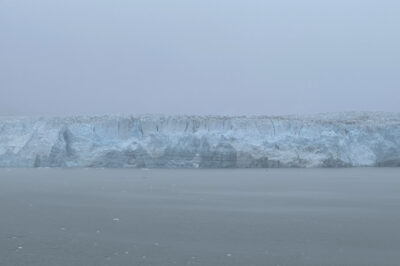
Hubbard is an active glacier almost seven miles wide where it meets the ocean. Its face is 400 feet tall and the icebergs which calve regularly from the face are 3 to 4 stories in height. A loud roar is heard when the glacier “calves” and a huge piece of ice splashes into the water.
Hubbard Glacier
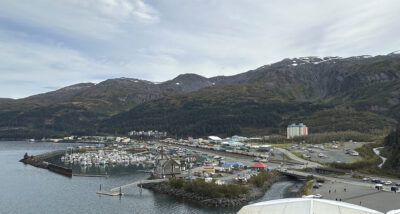
The next day we arrived in Whittier, Alaska. The entire town is in the picture below. Almost all the residents (population: 272) live in the tall apartment building on the right of the photo.
Whittier, Alaska
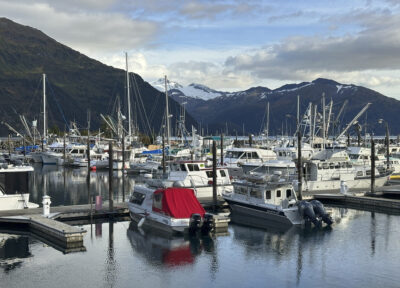
We walked along the waterfront passing the fishing boats in the marina. We found the tunnel which goes under the railroad tracks and connects the harbor to the residential building.
Fishing Boats in Whittier
Whittier is a fishing village with shops renting kayaks, fishing gear, and hiking & mountaineering equipment. There was a quaint coffee shop called The Lazy Otter and, of course, a saloon.
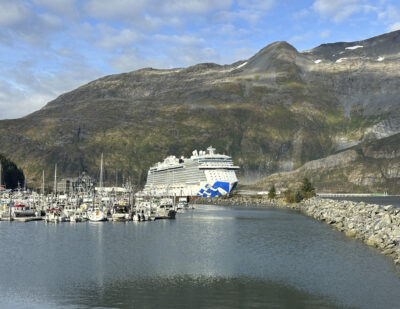
Discovery, Princess in Whittier
This was our last port until Tokyo. We had nine sea-days aboard the Discovery Princess between Whittier and Tokyo. As the ship cruised southwest along the Aleutian Islands, Captain Tony announced that if the weather became rough, the ship would seek refuge closer to the islands.
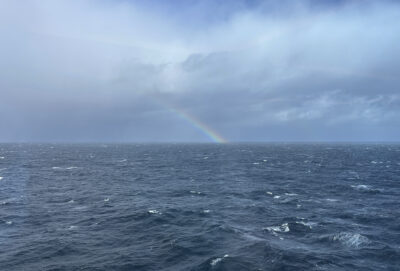
Rainbow at Sea
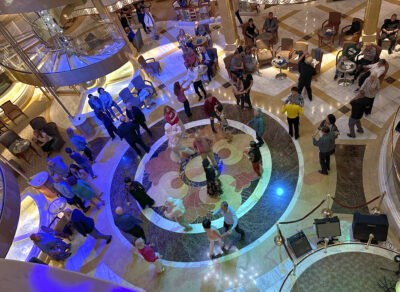
There’s always plenty to do aboard a ship on sea-days: exercise classes, Zumba, demonstrations, pools/hot tubs, bingo, enrichment lectures, gambling (for some people), movies, a book exchange, dance lessons, entertainment: singers & musicians, talks on a variety of subjects, special interest groups. I finished reading three books.
Dancing in the Piazza
We joined a “progressive trivia” group where we played trivia every day and team scores were cumulative. There were 58 teams, the one with the highest score after 9 days was the winning team. At the end, our team called “The Golden Girls and Guys” tied for second place!! Yay!!
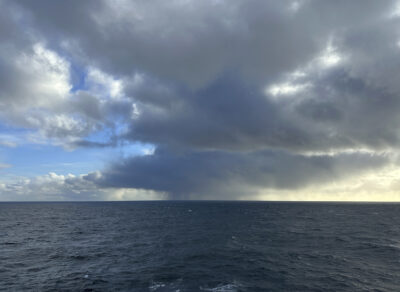
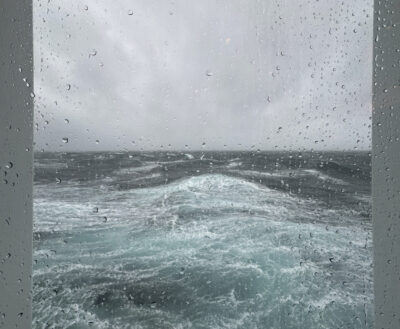
Rain in the Pacific Ocean
On our first night at sea, it was 39 degrees, the wind howled, it rained very hard, and the ship swayed from side to side. The motion didn’t bother us except we had to be careful walking around the ship and on the stairways. We went to a lecture given by a junior officer who said the ship’s stabilizers reduced the roll of the ship by 80%. Good to know!
Cruising Toward Tokyo
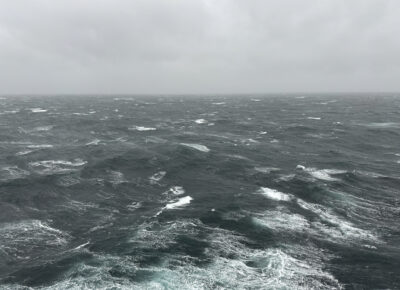
Captain Tony gave his daily reports: “Weather for the next 24 hours will be the same as the last 24 hours. High winds and rough seas.” He said due to the rough weather the ship would have to move slowly.
Stormy Weather
During one of Captain Tony’s reports he said that there was a second typhoon off the coast of Japan which was giving us bad weather. We later learned the winds had reached 110 miles per hour with 40 foot high waves.
Pacific Typhoon
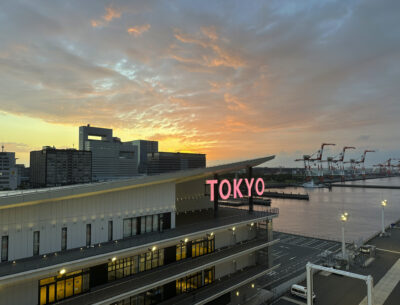
Early Tuesday morning October 14th we arrived in Tokyo, Japan. It was a cloudy 62 degrees, and it was good to finally set foot on land again.
Sunrise Over Tokyo Harbor
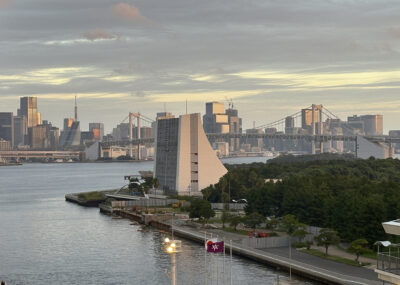
Greater Tokyo is the most populous metropolitan area in the world with 41 million residents. The city became the capital of Japan in 1868 and is located on the eastern coast of Honshu Island.
Modern Tokyo
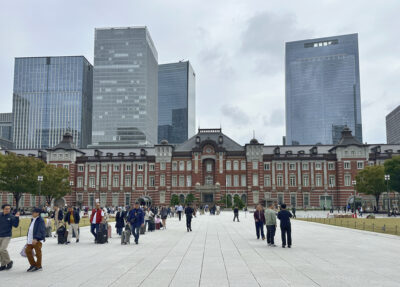
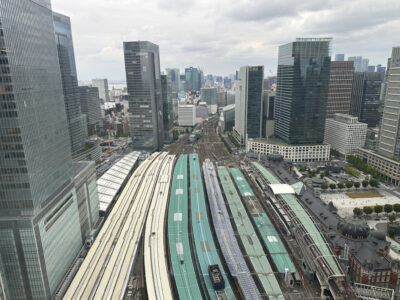
We took a taxi to our hotel which was located overlooking the historic Tokyo Train Station. The red brick station opened in 1914 and has been reconstructed and expanded over the years.
Tokyo Train Station
Tokyo Station is the busiest in Japan with more than 4,000 trains arriving and departing daily, including the famous Shinkansen high-speed trains.
View of Tokyo Station From Our Hotel
On our last visit to Japan we saw the wonderful cities of Kyoto, Nara, Hakone, and Kanazawa. This time, we wanted to stay in Tokyo to see as much of the city as we could in 11 days on our own.
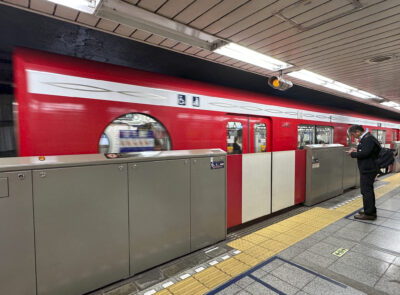
Tokyo Train
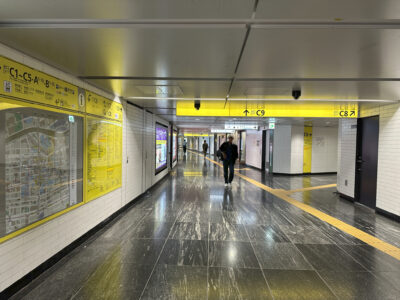
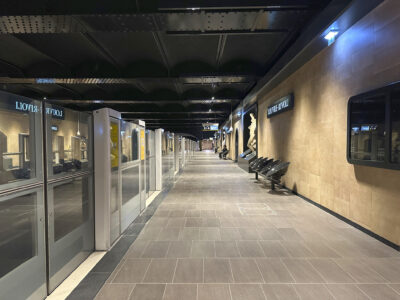
Public transportation in Tokyo is amazing! The station is served by regional commuter lines, Metro system, and the inter-city rail network. There is a multi-level labyrinth of tunnels connecting the trains. All the trains and tunnels were spotlessly clean, well lighted, and safe.
Underground Walkway
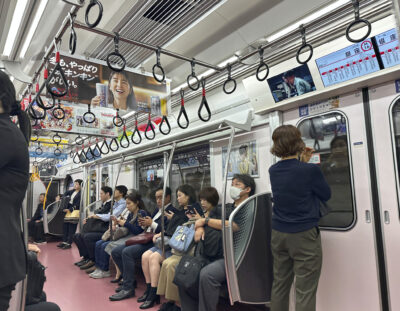
The stations had shops, convenience stores, restaurants, and services. The tunnels had good signs and maps directing pedestrians and the trains had printed signs in four languages explaining their routes.
Inside a Typical Train
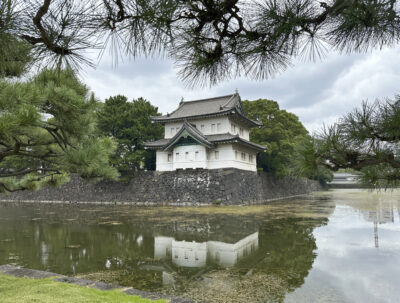
The Emperor of Japan lives in a palace located in the Imperial Gardens. The royal residence is not open to the public, however visitors can explore the beautiful Imperial Palace East Garden and the ruins of the Edo Castle, built in 1457.
Imperial Gardens
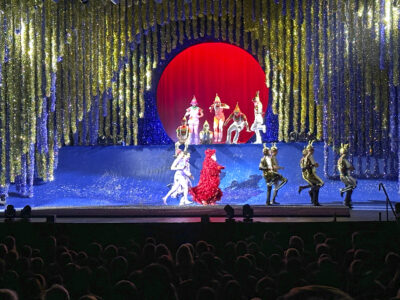
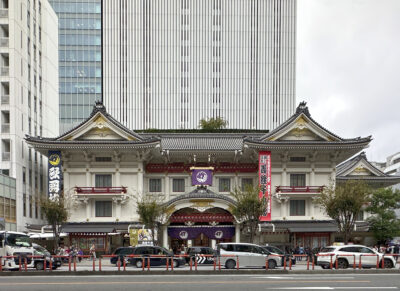
We went to the Kabukiza Theater to see a Kabuki performance. Kabuki is a classical Japanese art form known for its stylized dancing, acting, music, and elaborate costumes and makeup. A typical performance lasts four hours, but we bought one-hour single-act tickets. It was Wonderful!
Kabukiza Theater
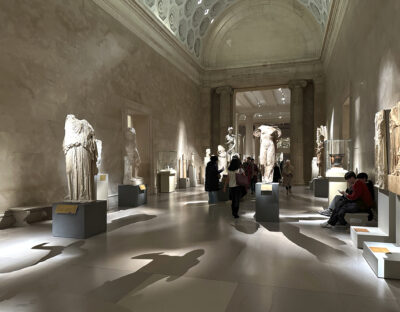
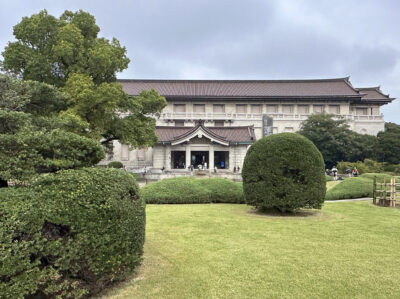
One rainy day, we went to the Tokyo National Museum in Ueno Park. The museum has an extensive collection of Asian art as well as ancient and medieval Japanese art. Some of the works are designated as National Treasures for their workmanship and importance of cultural history.
National Museum
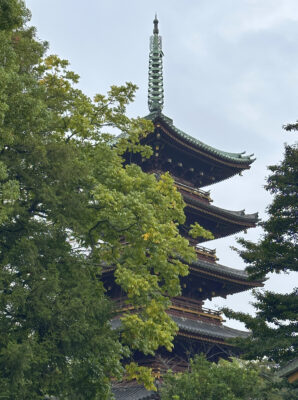
The Five-Story Pagoda is also located in Ueno Park. It was built in 1639 as a part of a Buddhist Temple complex.
Five-Story Pagoda
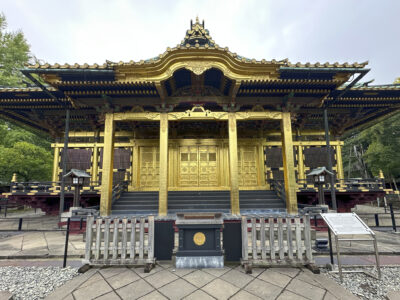
Nearby is the “golden temple” which is actually a Shinto shrine famous for its lavish gold leaf decoration. Established in 1627, the shrine is dedicated to the founder of the Tokugawa Shogunate.
Ueno Toshogu Shrine
Kinryu-zan Senso-ji also known as the Asakusa Kannon Temple is the oldest temple in Tokyo. The original Buddhist temple was founded in 628. The building was destroyed in WWII and rebuilt in 1958.
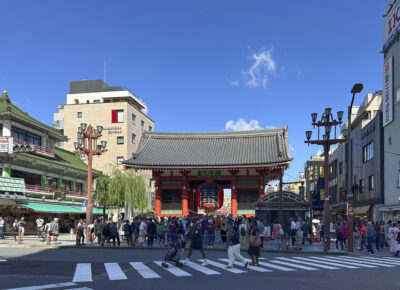
Kaminarimon Gate
The Kaminarimon or “Thunder Gate” is the first gate leading to the Senjo-ji Temple complex. It features a massive paper lantern in the center. Four statues representing Shinto and Buddhist gods guard the gate.
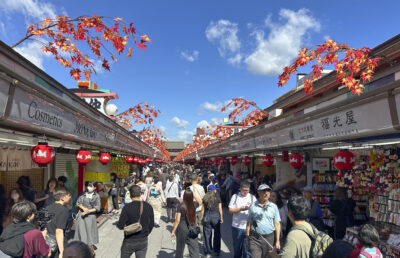
Shops of Nakamise-dori
After passing under the huge lantern of Thunder Gate, visitors are on Nakamise-dori which is a long narrow shopping street full of small stalls selling souvenirs, snacks, traditional sweets, and t-shirts.
Street Scene
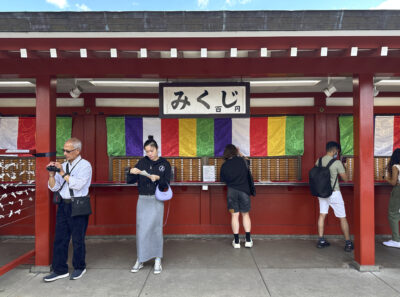
Outside the temple, tourists traditionally have their fortunes told for 100 Yen. Fortunes are written in Japanese and English. If it’s a bad fortune, tie it to the nearby wire rack. If it’s a good fortune, take it with you.
Omikuji – Fortunes
There is a particular etiquette at Japanese Shrines and Temples: first wash your hands; stop at the incense burner for good health or wisdom; place offerings in the box; ring the bell two or three times; bow twice; clap twice; pray and remember to thank the gods; deeply bow again.
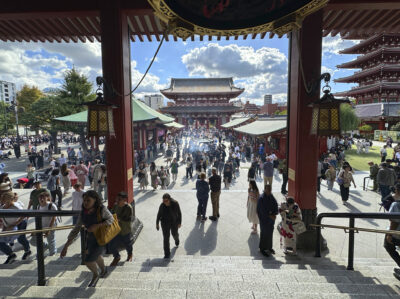
View From the Steps of Asakusa Temple
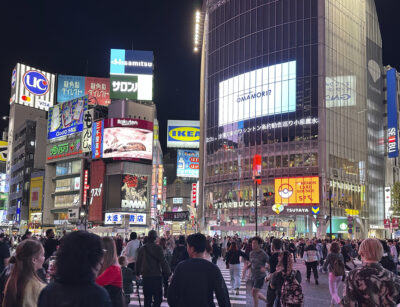
Shibuya Crossing is the world’s busiest pedestrian intersection with as many as 3,000 people crossing the street during a single green light. We went twice: at night and in the afternoon. It was crowded both times!
Shibuya Crossing
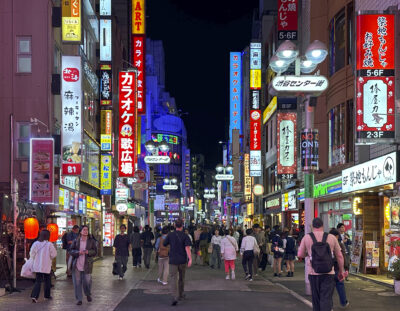
Shibuya is a major commercial shopping and entertainment district.
Shibuya District at Night
We walked about 6 miles every day during our stay in Tokyo taking trains everywhere.
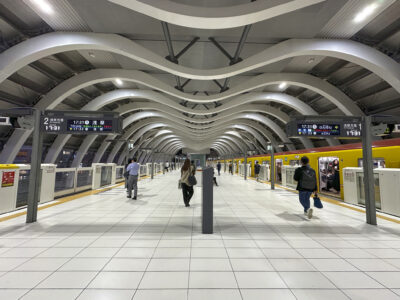
An Amazing Train Station
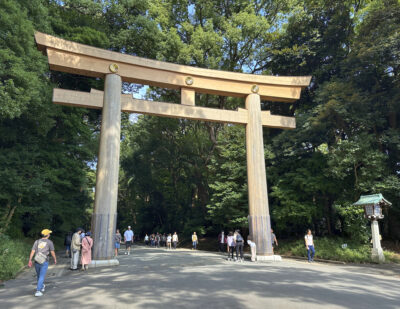
The Meiji Shrine’s torii gates are large wooden “gates” that mark the entrance to the sacred grounds. They are made of 1,500-year-old cypress wood and symbolize the separation between the secular world from the divine.
Ootorii Torii Gate at the Meiji Shrine
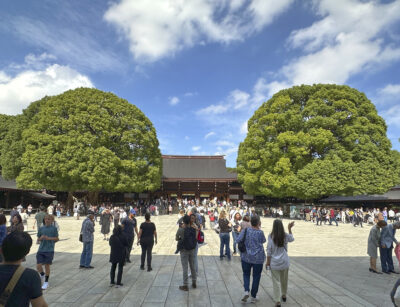
The Meiji Jingu Shrine is a Shinto shrine dedicated to the Emperor Meiji and his wife, Empress Shoken. The original shrine was completed in 1921 and rebuilt in 1958.
Meiji Jingo Shrine
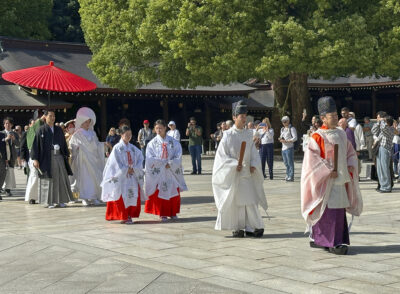
Weddings at Meiji Shrine are traditional Japanese Shinto ceremonies. We were lucky to see a wedding procession of priests, shrine maidens, the bride and groom, and the couple’s family and friends.
Wedding Procession
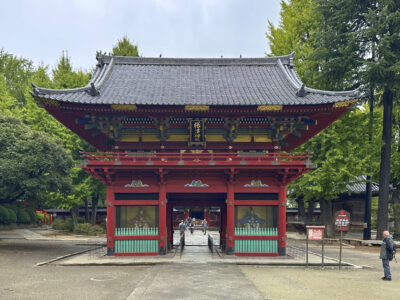
On another day, we took the train to Nezu Shrine. It’s a Shinto shrine located in a residential neighborhood. It was established in 1705 and is described as “Tokyo’s most beautiful shrine.”
Romon or Tower Gate at Nezu Shrine
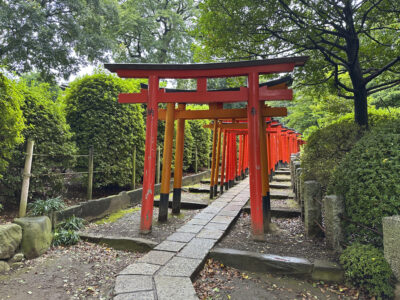
One of the most famous features of the the shrine is the “path of vermillion torii” across the hillside. In the middle of the path there is a viewing platform over a pond which overlooks the main shrine.
Path of Torii Gates
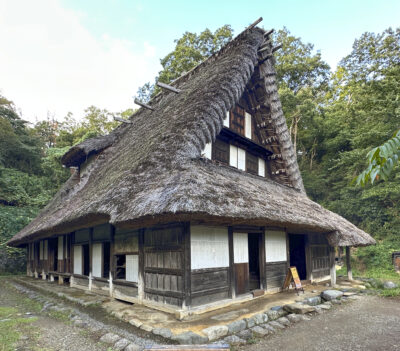
We took a train to the wonderful Nihon Minka-en, Japan Open Folk House Museum, located in the city of Kawasaki. This is a collection of 25 traditional farm houses from various regions of Japan which were built during the Edo Period 1603 – 1868. The houses were relocated and reconstructed to show the lifestyles of the former residents.
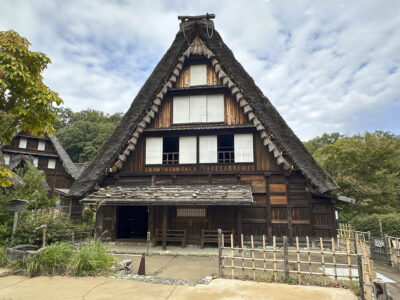
Yamashita House
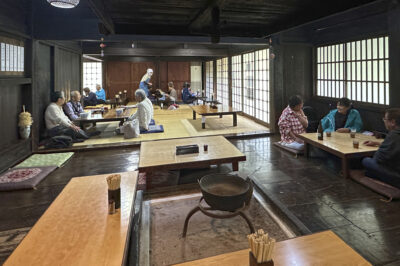
The Yamashita House is a historic gassho-style farmhouse which was originally built in the early 1800s. Today it houses a traditional soba restaurant called Shirakawagou which serves hot and cold soba (buckwheat) dishes.
Shirakawagou Restaurant
There were traditional farmhouses, samurai houses, merchant houses, homes from fishing villages, a water mill, and a shrine. During the year there are festivals and traditional handicraft demonstrations.
Emukai House
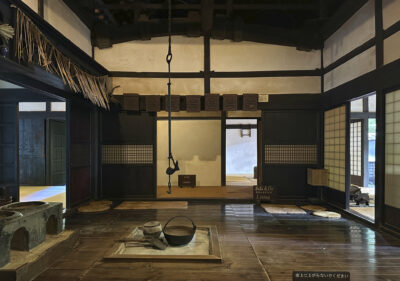
The houses are listed as Important Cultural Properties of Japan. The interiors of the farmhouses were as varied as the houses. They reflected the time of construction, the region of Japan where they were built, and occupations of the owners.
Interior of a Merchant’s House
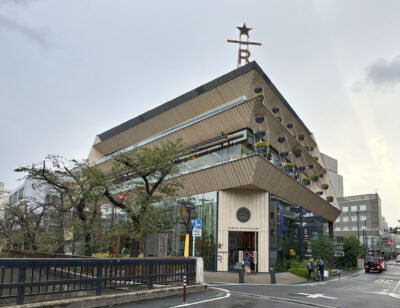
There are six Starbucks Reserve Roasteries in the world and one is located in Tokyo. They feature in-house roasting of specialty coffees, bakery items, and sandwiches. We had to visit the one in Tokyo!
Starbucks Reserve Roastery
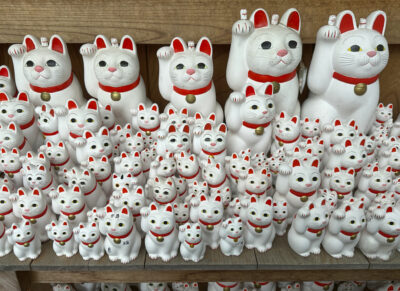
Gotokuji Temple is a Buddhist temple which originated the “beckoning cat.” The legend is that the cat saved a feudal lord by beckoning him into the temple to shelter from a storm. Today people believe the cat statues bring prosperity and good luck.
Gotokuji Temple Cats
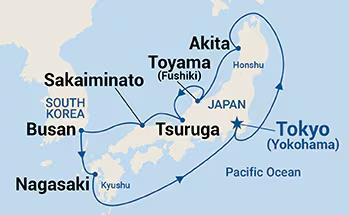
On Saturday October 25th we checked out of our hotel in Tokyo and went to the Yokohama cruise port to board the Diamond Princess ship to cruise around Honshu Island to visit cities on the western coast of Japan.
Diamond Princess Itinerary
It was windy and raining during our first night and day aboard the Diamond. The plan was to have one “sea day” between Tokyo and Akita, however the winds were so strong that the port of Akita was closed to ships, so we had a second “sea day.”
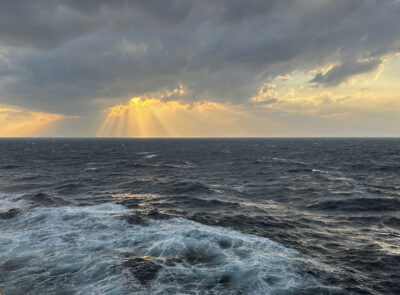
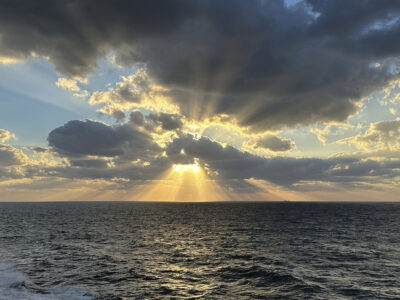
Sunset Over the Sea of Japan
The Diamond Princess cruises mainly in Asia with frequent departures from Japan, so it was no surprise that most of the passengers on the ship for this cruise were Japanese.
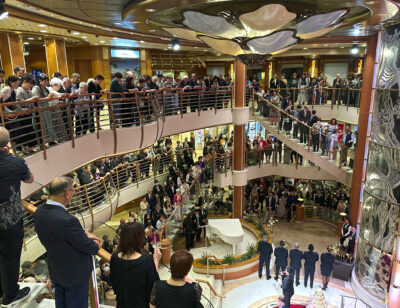
Formal Night in the Plaza
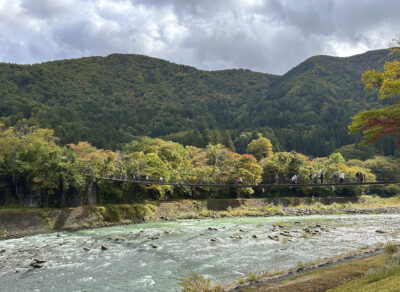
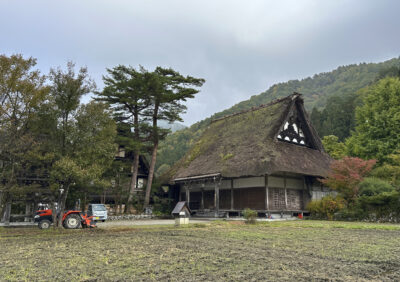
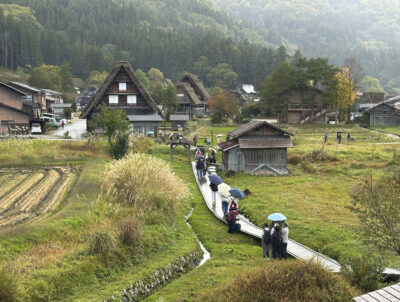
On Tuesday October 28th the ship docked in the city of Toyama. We booked an excursion to visit the historic village of Shirakawa-mura, which means White River Village. It is a UNESCO World Heritage Site known for its buildings with steep thatched roofs called gassho-zukuri.
Footbridge Across the River
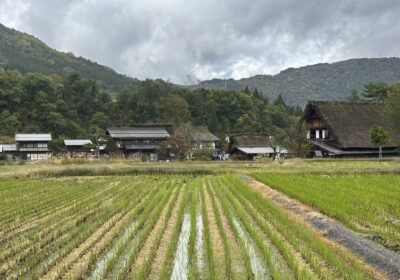
It is a working agricultural village of approximately 1,600 people surrounded by mountains. People continue to farm and live in the traditional houses. The farmhouses were built in the 1800s without nails.
A Gassho-zukuri Farmhouse
A few of the historic houses were open to the public as museums. Some other buildings were used as restaurants or shops.
Rice Field
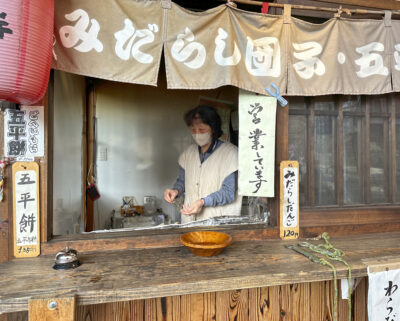
We stopped for a snack at a small window where a woman was cooking Gohie mochi. It was made from pounded rice, that is grilled and coated with a miso glaze. It originated as a portable food for mountain workers and foresters.
Gohei Mochi Stand
It rained on and off the day we visited. Shirakawa Village is known as one of the snowiest places in Japan with an average yearly snowfall of 32 feet. The thick thatched roof of the gassho-zukuri houses were created to deal with heavy snow.
Shirakawa Village
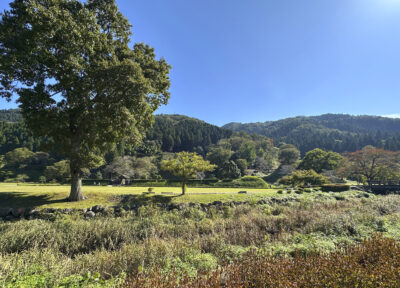
On Wednesday October 29th the Diamond Princess docked at the port of Tsuruga. We first visited the Ichijodani Asakura Family Historic Ruins. The Asakura samurai clan controlled the region for one hundred years. Several houses have been reconstructed to show how the people lived during the 15th century.
Valley of the Asakura Family Ruins
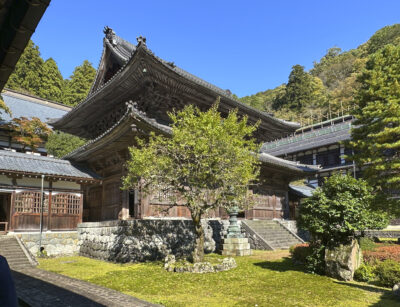
We also visited the Eihei-ji Temple, which is one of two main temples of the Soto School of Zen Buddhism. The name means “temple of eternal peace.” It is located on the side of a mountain and the gardens were incredibly beautiful.
Eihei-ji Temple
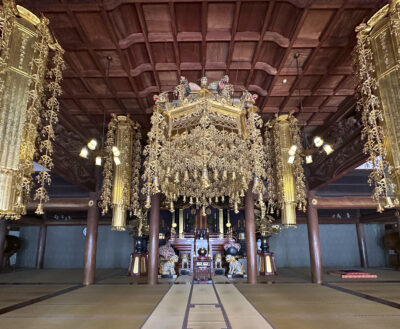
The founder, Eihei Dogen, brought Soto Zen from China to Japan in the 13th century. The oldest structure standing today dates from 1794. The temple is a training monastery with more than 200 monks and nuns in residence.
The Dharma Hall
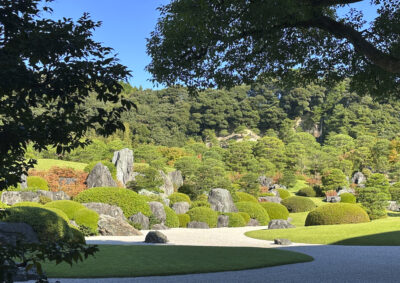
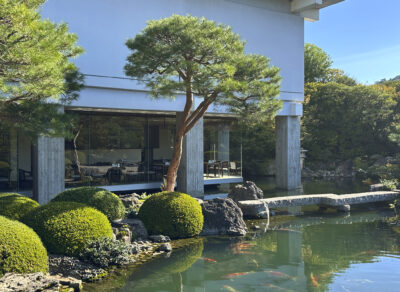
Thursday October 30th the ship docked at the port city of Sakaiminato. We had an excursion to visit several sights in the area. We first visited the beautiful Adachi Museum of Art and Gardens.
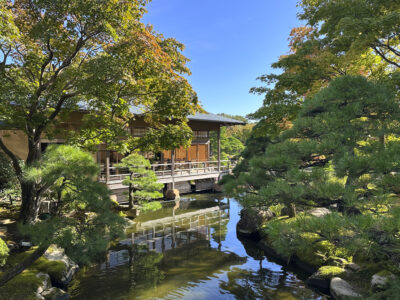
One of Six Gardens at the Adachi Museum
The museum was founded by Adachi Zenko to house his private art collection and feature artworks of notable Japanese artists. He also wanted visitors to experience the sublime beauty of Japanese gardens.
Adachi Museum
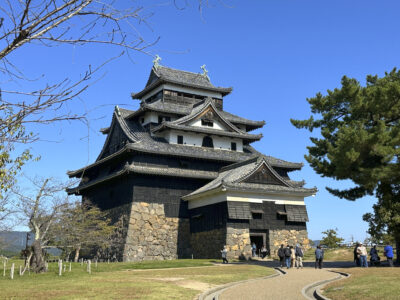
We visited Matsue Castle which was constructed in 1611. It is one of the few remaining feudal Japanese castles whose keep is in its original wooden form. The large tower has survived earthquakes, fires, and wars.
Matsue Castle
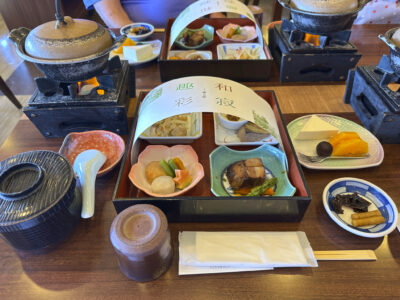
After visiting the castle, we went to Yuushien Garden which is located on Daikonshima Island in the middle of a lake. There we were treated to a special kaiseki luncheon at the Zen Restaurant. This is my favorite type of Japanese food. A variety of delicious morsels are beautifully arranged on small plates.
Kaiseki Lunch
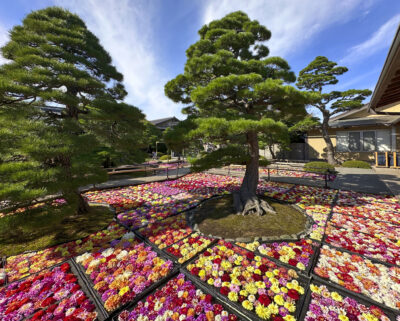
Yuushien Garden is famous for growing Korean ginseng and beautiful Japanese peonies. After lunch, we walked around the gorgeous gardens which were full of beautifully arranged exotic plants and trees.
Dahlias in Bloom
Cypress Garden
Water Lilies and Cherry Trees
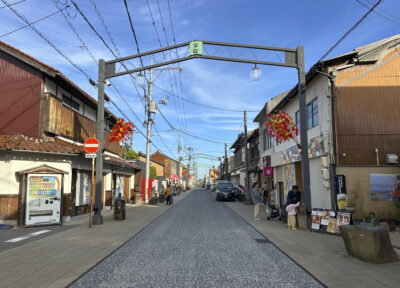
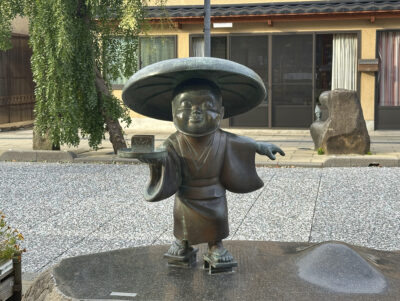
Our last stop of the day was a visit to Mizuki Shigeru Road, which honors the birthplace of manga artist Mizuki Shigeru. The street is lined with over 170 bronze statues of his characters. The shops, eateries, and bakeries along the street are all decorated with his Kitaro themes.
Mizuki Shigeru Road
A Bronze Mizuki Character
Friday, October 31st we docked in the port city of Busan, South Korea, which is the second largest city in Korea after the capital, Seoul.
Busan, South Korea
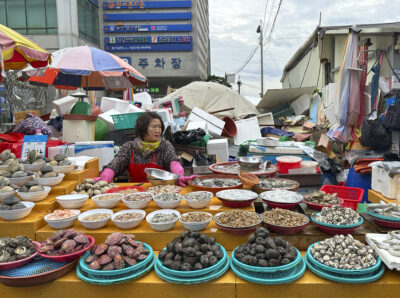
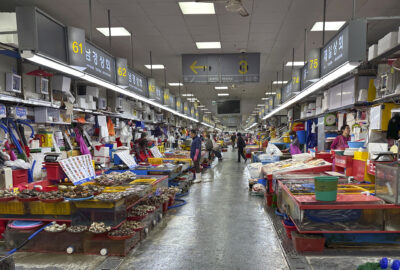
The Jagalchi Fish Market is a huge seafood market. It is known for the majority of female fishmongers who historically sold seafood at the market.
Outdoor Fish Market
Jagalchi Fish Market Interior
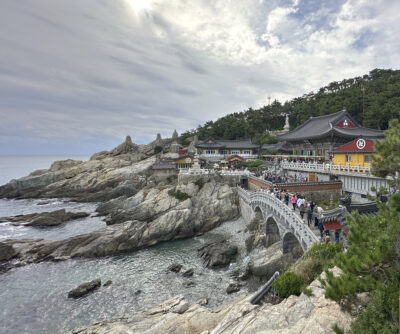
Haedong Yonggung Buddhist Temple is a large religious complex along the rocky coast. The first temple was built on this site in 1376. Recently, the temple was rebuilt after a fire in the early 1930s.
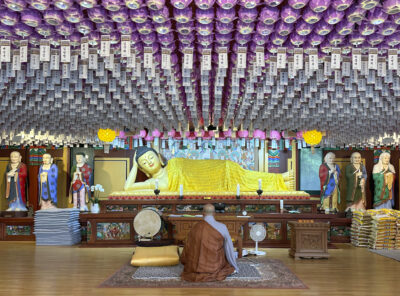
Haedong Yonggungsa Temple
Many people visit the temple to have their wishes granted and there were many opportunities to leave donations.
Prayer Session
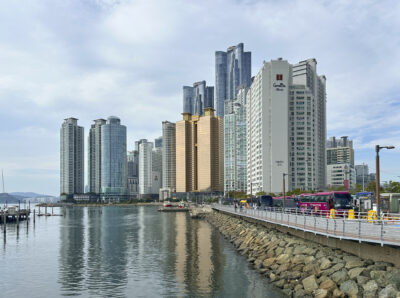
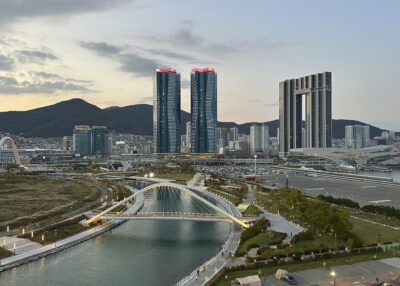
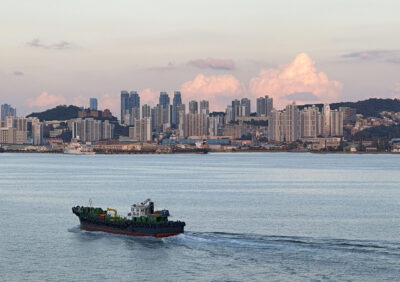
Busan is a vibrant modern city known for its beaches, mountains, sporting events, the Jagalchi Fish Market, street food markets, and cultural attractions.
Modern Busan
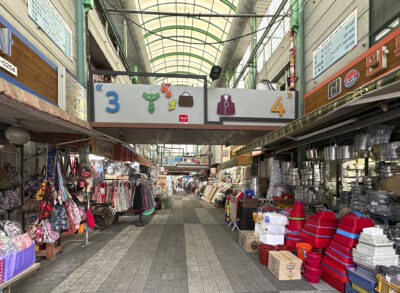
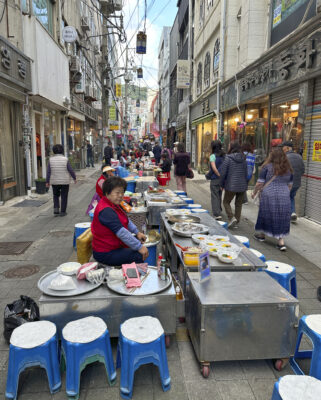
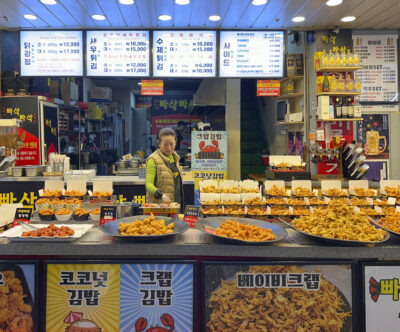
We visited several huge outdoor street and covered markets. The local guide led us up and down the streets and alleyways of the markets where food and all kinds of goods were offered for sale.
Market Directory
Arirang Street Food Market
Prepared Food
We saw as much of the city as we could in one full day with a local tour guide. South Korea has a long and complicated history but Busan looked like it was surging into the future.
Busan Skyline
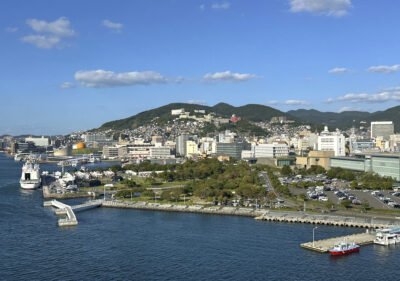
Saturday November 1st, Diamond Princess traveled overnight from Busan to Nagasaki, Japan. We decided to have a restful day in Nagasaki, so we explored a bit of the city on our own. Public transportation is easy in Japan so we used our Suica cards on the trams to go the center of the city.
Nagasaki, Japan
We had one more “Sea Day” aboard the Diamond Princess between Nagasaki and Tokyo. It was 70 degrees and calm seas so we enjoyed our last day of cruising.
At dawn on Monday November 3rd we arrived in the port of Yokohama on Tokyo Bay. We were packed and ready to go to Haneda Airport, one of Tokyo’s major international airports.
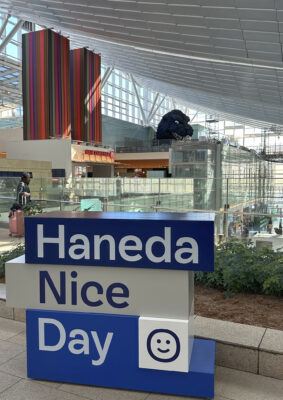
Haneda Airport
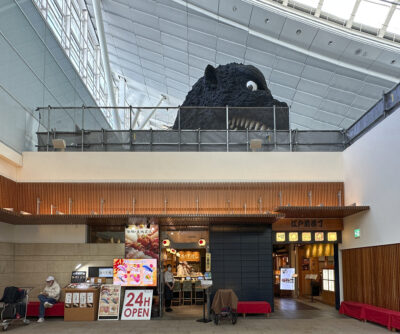
In typical Japanese style, Haneda was a fun place to wait for our flight. There were many interesting shops, restaurants, and snack bars to help pass the time.
Restaurant at Haneda Airport
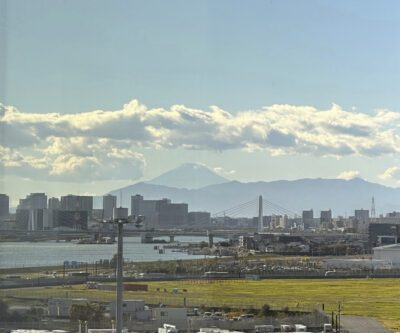
It was a clear sunny day in Tokyo and from the lounge at the airport, we saw Mount Fuji in the distance beyond the mountains. What a thrill. At 12,389 feet, Fujiyama is an impressive sight.
October 30th, 2025 . Posted in France | Comments Off on Paris: Aug 25 – Sept 13, 2025
I love Paris! It’s such a beautiful city. There is so much to see and do and it’s easy to get around by walking or taking the Metro. This year I joined a small tour group to visit Paris, Giverny, Versailles, and Normandy.
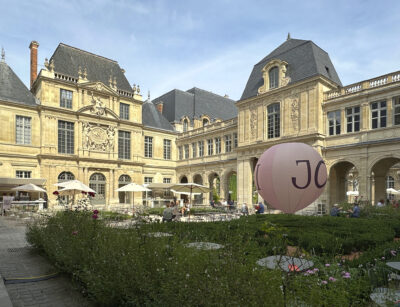
Le Musee Cognacq-Jay
I arrived a few days early to enjoy some time to explore on my own. I arrived on Monday, August 24th. Armed with my “Navigo” Metro pass and sturdy walking shoes, I visited small lesser-known museums.
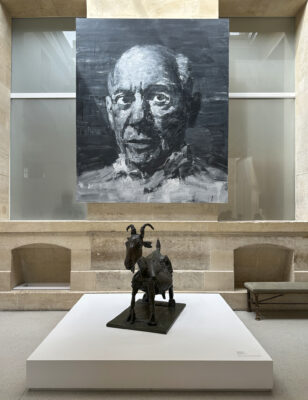
Le Musee Picasso
The Musee Carnavalet had interesting artifacts and exhibits on the history of Paris. The Musee Cognacq-Jay contained the art collection of the founders of La Samaritaine department store. The Picasso Museum was excellent and exhibited the artist’s works chronologically.
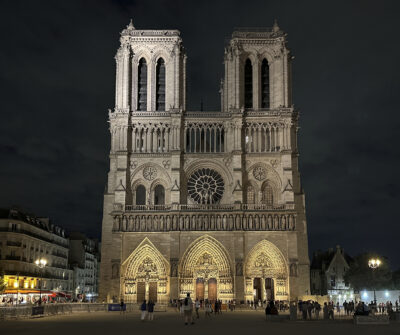
Notre Dame
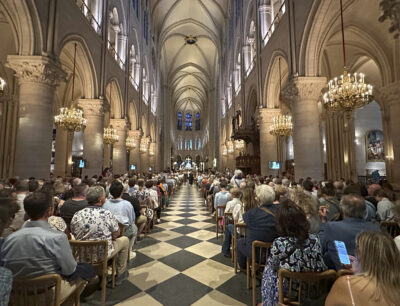
Notre Dame Cathedral reopened to the public last December after five years of restoration following the devastating fire in 2019. I had ordered tickets online for an organ recital one night. It was a wonderful experience to hear the sound of the organ fill the magnificent space of the cathedral.
Interior of Notre Dame
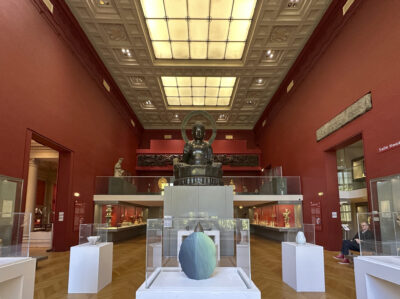
The Musee National des Arts Asiatiques-Guimet has one of the largest collections of Asian art outside Asia. I especially enjoyed a special exhibit of black & white photographs taken in Asia by Michael Kenna.
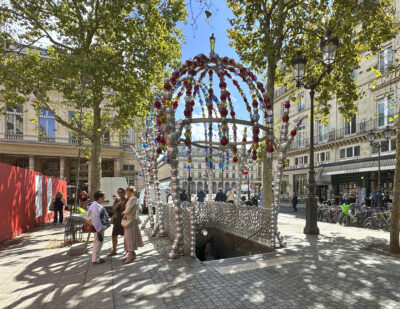
A Metro Station
The Musee du Quai Branly-Jacques Chirac is housed in a modern building and featured indigenous art and culture of Africa, Asia, Oceania, and the Americas. There was a lovely peaceful garden outside the museum where people were eating picnic lunches.
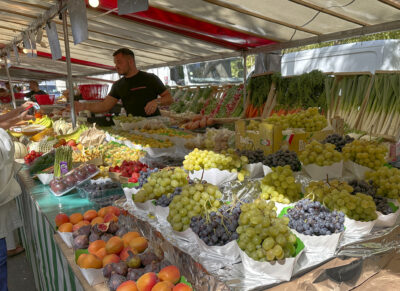
Street Market
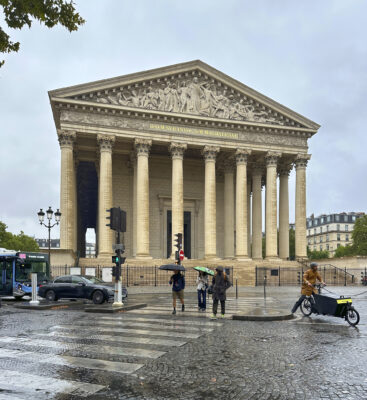
La Madeleine
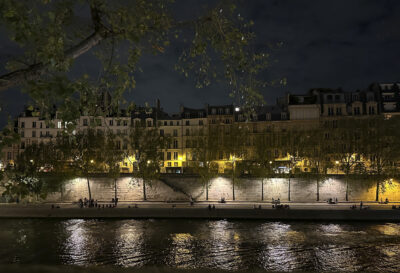
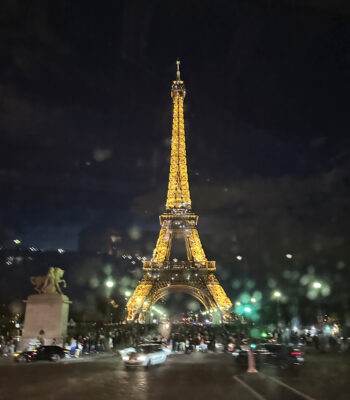
Along the Seine at Night
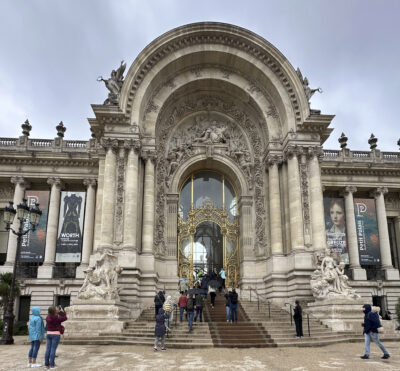
My time alone passed quickly and on Friday morning, I took a taxi from my little Parisian hotel to the tour group’s hotel in the residential 17th Arrondissement. After everyone checked in, we all took a Metro to the Petit Palais on the Champs-Elysees.
Le Petit Palais
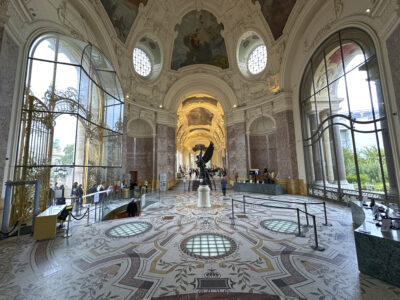
Built in 1900 as an exhibition space, the Petit Palais has an interesting collection of paintings and sculptures. The building is magnificent. It is one of the municipal museums of the City of Paris so it has free admission.
Interior of Le Petit Palais
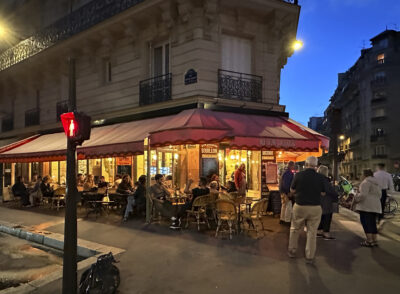
Part of any visit to Paris is eating good French food at a variety of interesting restaurants, bistros, brasseries, and cafes. Our small group of congenial retirees enjoyed several French restaurants.
Brasserie Au Bon Jacques
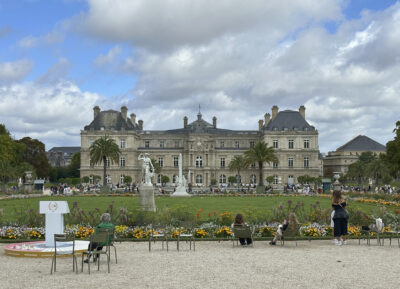
The next day, we enjoyed a bus tour of Paris and we saw all the famous monuments, buildings, and historic landmarks of Paris. It is a charming city with impressive architecture and lovely green parks.
Luxembourg Garden
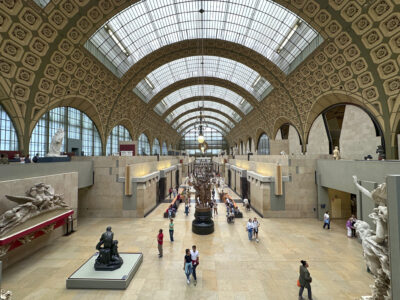
Despite the crowds of tourists, it was fun to visit the D’Orsay Museum. The former Beaux-Arts railway station has an excellent collection of Impressionist paintings.
Musee d’Orsay
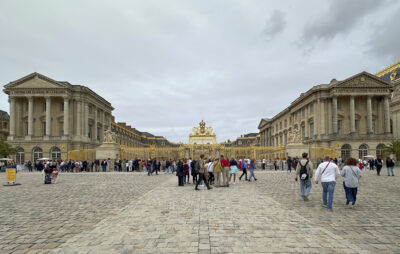
We also took a day trip to the magnificent Palace of Versailles. Originally built as a hunting lodge in 1623 by King Louis XIII, the chateau and gardens are a UNESCO World Heritage Site.
Entrance to the Palace of Versailles
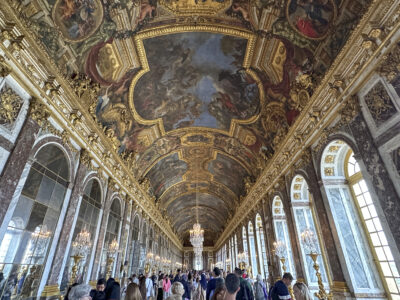
We toured the Queen’s Apartments and several other large ornate rooms. The Treaty of Versailles which formally ended the First World War was signed in the impressive Hall of Mirrors.
Hall of Mirrors
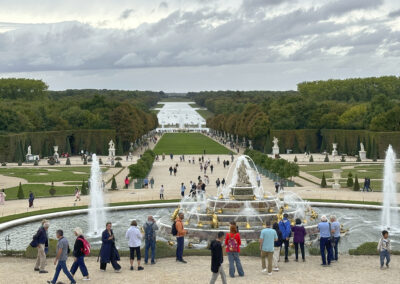
The Palace of Versailles Gardens
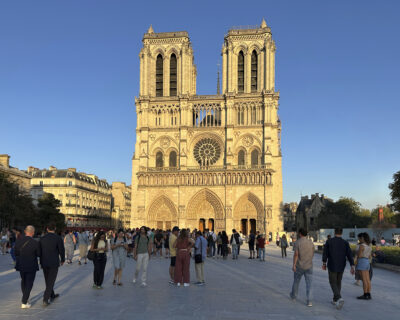
We had timed tickets to see the interior of Notre Dame Cathedral. A thousand years of grime, dirt, and smoke on the walls of the cathedral were cleaned during the restoration to reveal light gray/white walls.
Cathedral Notre Dame
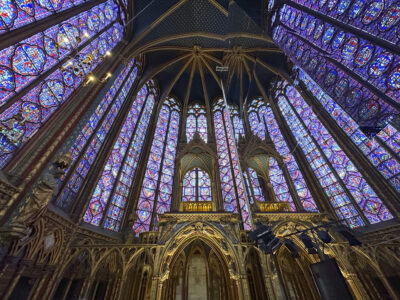
Sainte-Chapelle is a masterpiece of French-Gothic architecture commissioned by King Louis IX in 1248. Its most striking feature is the 15 vast stained glass windows depicting biblical scenes.
Sainte Chapelle
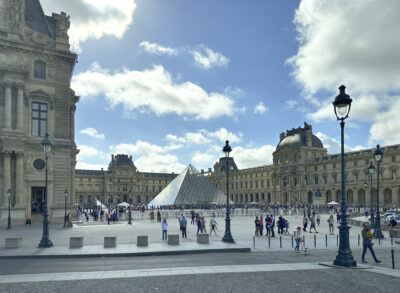
Of course, no trip to Paris is complete without a visit to the impressive Musee Louvre. It is the largest and most visited art museum in the world. It was originally a 12th century fortress and later became a royal palace.
Louvre Museum
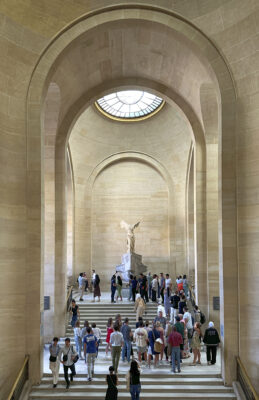
Winged Victory of Samothrace
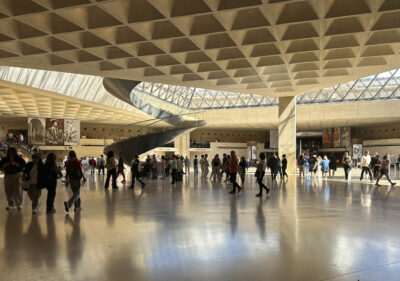
The Carrousel du Louvre is a modern underground shopping mall with chocolate shops, restaurants, souvenir stands, clothing stores, an Apple store, a Sephora, and a Mariage Freres Tea shop.
Under the Glass Pyramids at the Louvre
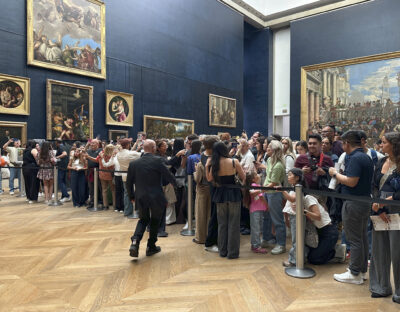
Most of the people in the photo below are not looking at the Mona Lisa. Their backs are toward the painting and they’re looking at their smart-phones while they take “selfies.” Soon Mona Lisa will have its own separate wing with timed-ticket admission. I wonder if anyone will visit the rest of the museum.
The Crowd at the Mona Lisa
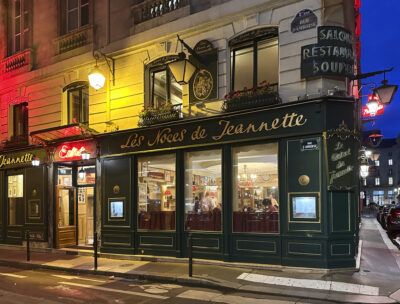
Restaurant les Noces de Jeannette
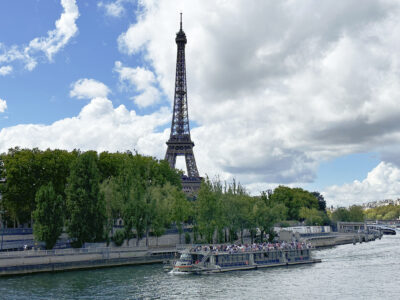
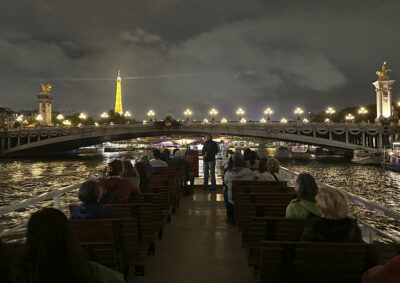
It had been raining lightly when we set out one evening to take a boat ride on the Seine River. Although it was cool and cloudy, the rain stopped long enough so we could enjoy a lovely night tour of the city.
Boat Ride on le Seine
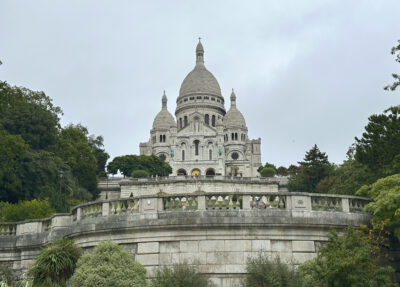
We visited Sacre-Coeur and afterwards walked around the Montmartre neighborhood. The artists and bohemians are long gone and have been replaced by tourist restaurants, souvenir shops, and upscale apartments.
Basilique du Sacre-Coeur de Montmartre
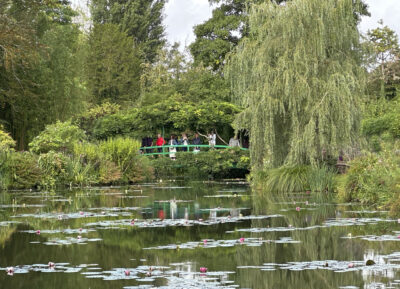
After a pleasant bus ride out of Paris, we arrived in the village of Giverny where Claude Monet lived and painted for the last 43 years of his life. The gardens are incredibly beautiful with a wide variety of flowering plants.
Monet’s Garden
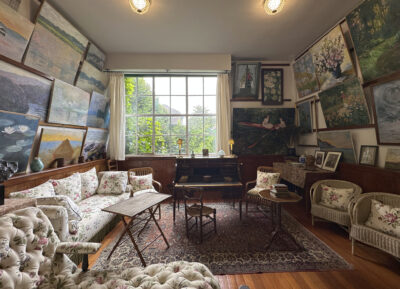
Monet’s house is a comfortable colorful French farmhouse decorated with Japanese prints and copies of the artist’s paintings.
Monet’s Living Room
Parisian Message
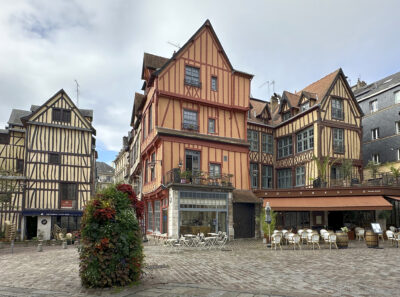
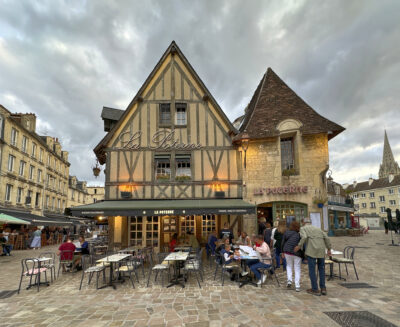
On Friday September 5th, the group left Paris to go to Rouen, which is the capital city of the region of Normandy. The cobblestone center of Rouen has many beautiful medieval half-timbered houses.
Timber-framed Houses in Rouen
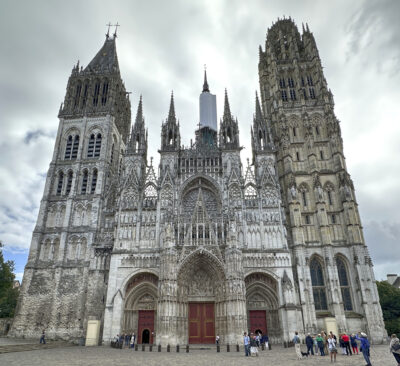
We saw the Gothic churches of Saint-Maclou and Saint-Ouen and nearby Roman ruins. The group visited the Eglise Sainte-Jeanne-d’Arc which is a modern church built on the site where she was martyred. Monet painted the Cathedral of Notre-Dame many times in different light.
Cathedral of Notre-Dame de Rouen
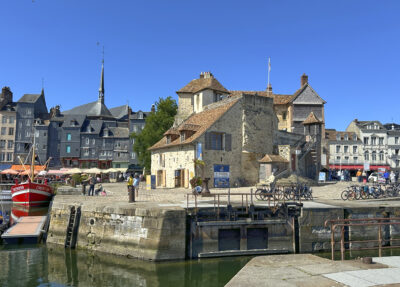
We continued on to the village of Honfleur which is known for its well-preserved medieval old port. Saint Catherine’s Church which was constructed by local shipbuilders dates from the 15th century.
La Lieutenance in Honfleur’s Old Harbor
Maison La Poterne in Caen
The group stayed for two nights in the Norman city of Caen which is known for its castle built by William the Conqueror in 1060. He was buried in Caen in 1087.
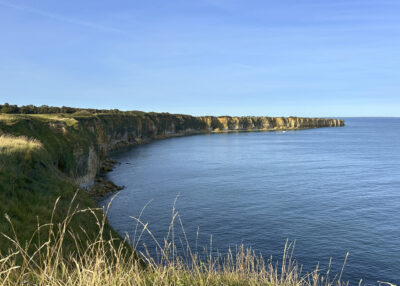
Normandy Beaches
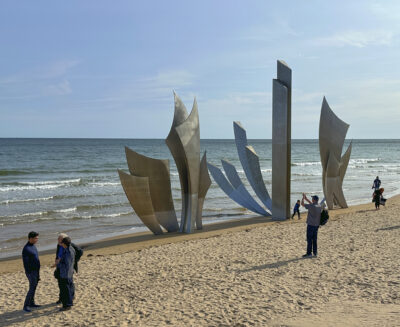
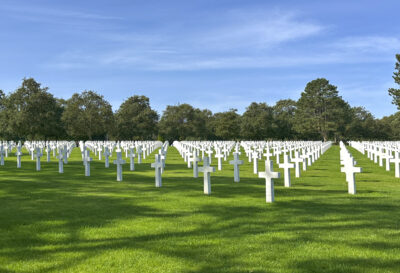
Normandy Beaches refer to the five sectors (Utah, Omaha, Gold, Juno, and Sword) where Allied forces landed on June 6,1944 during WWII. The beaches are historic landmarks and memorials to the invasion.
Les Braves Memorial on Omaha Beach
Normandy American Cemetery
Arromanches is a sea-side village near where the Normandy landings took place. Today it is a sweet little tourist destination overlooking the beautiful expanse of beach and the English Channel.
Town of Arromanches-les-Bains
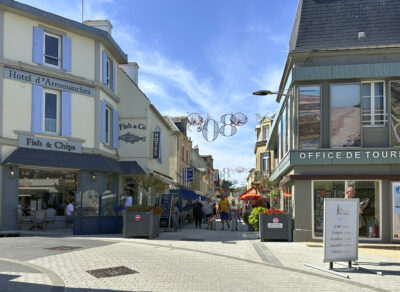
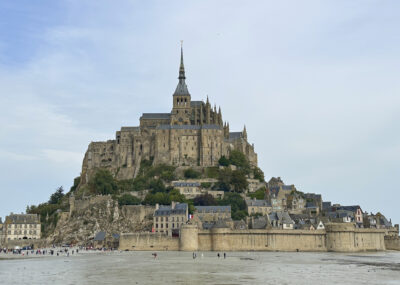
Mont Saint-Michel is a unique tidal island off the coast of Normandy. The entire island is comprised of a Roman Catholic abbey and about 60 buildings which house shops, restaurants, and hotels for tourists.
Mont Saint-Michel
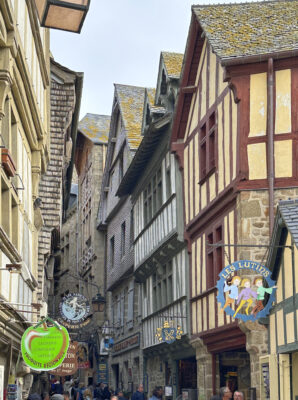
The last time I visited the island, 20 years ago, it was not very crowded. Today, there is a large parking lot on the mainland and a new bridge going out to the island. The narrow main street was very crowded.
Street Scene
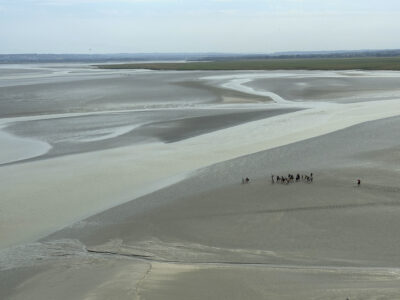
Low Tide at Mont Saint-Michel
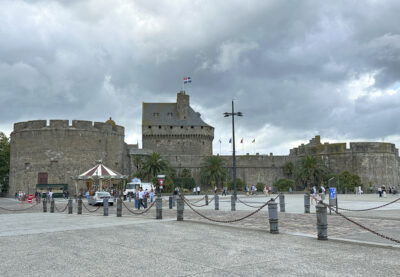
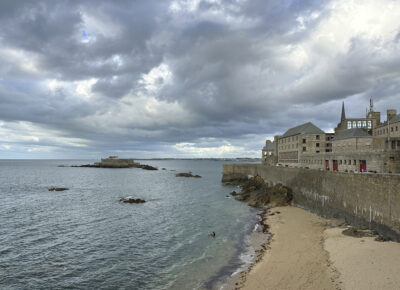
Saint-Malo is a walled medieval city located on the English Channel in the commune of Brittany. The old town is filled with charming, narrow cobble-stone streets and picturesque houses.
The Old Town of Saint-Malo
Saint-Malo Overlooking the English Channel
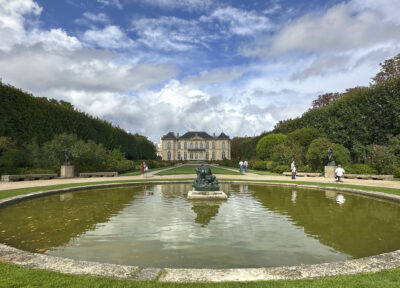
It was just a 3 1/2 hour drive from Caen back to Paris. We had time to visit the Rodin Museum in the afternoon. The beautiful 18th century building has as an excellent permanent exhibit of Auguste Rodin’s sculptures.
Rodin Museum and Garden
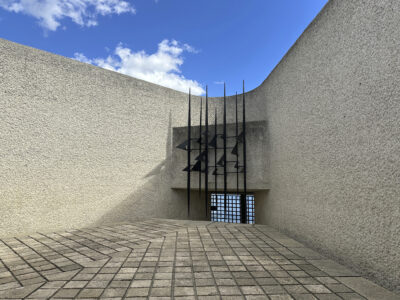
The Memorial to the Martyrs of the Deportation is a memorial to the 200,000 people who were deported from Vichy France to Nazi concentration camps during WWII.
Memorial des Martyrs de la Deportation
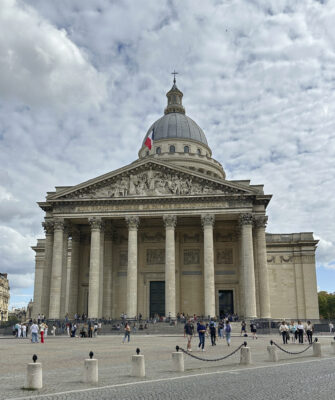
The Pantheon is a Neoclassical building that is a mausoleum for French national heroes. Some of the famous people who are entombed there are: Marie and Pierre Curie, Victor Hugo, Voltaire, Louis Braille, Josephine Baker, and Emile Zola.
The Pantheon
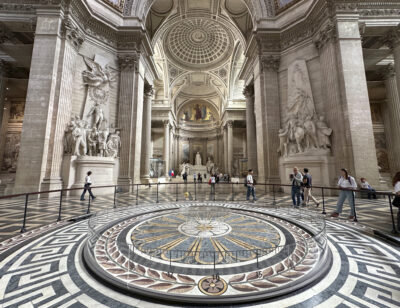
A Foucault Pendulum is suspended from the central dome of the Pantheon. This simple device provides a visible demonstration of Earth’s rotation.
Foucault Pendulum in the Pantheon
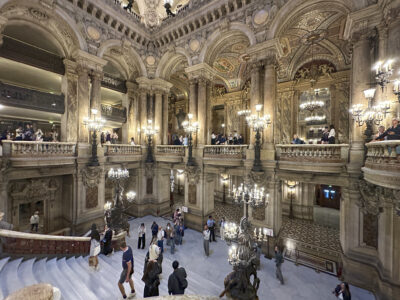
I could not take a good picture of the front of the Palais Garnier because it was covered with scaffolding. However, the interior was as impressive and magnificent as ever.
The Grand Staircase in the Palais Garnier
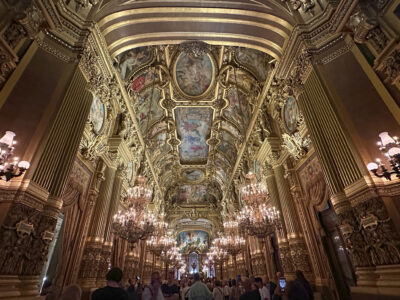
The Palais Garnier was built in 1875 for the Paris Opera. Since the opera company moved to a new building in 1989, the opulent Palais Garnier is used mainly for ballet performances. A guided tour is wonderful.
Grand Foyer of the Palais Garnier
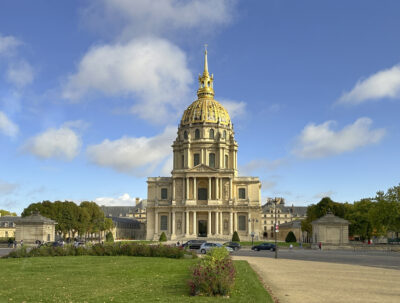
The Hotel des Invalides is a complex of buildings relating to the military history of France as well as a hospital and old soldiers’ retirement home. The Royal Chapel known as the Dome des Invalides contains the tomb of Napoleon.
Dome des Invalides
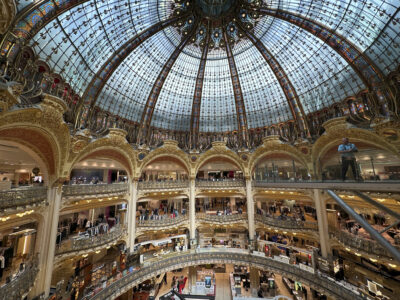
Our group also visited several department stores to see the beautiful interior spaces.
Interior of Galeries Lafayette Haussmann
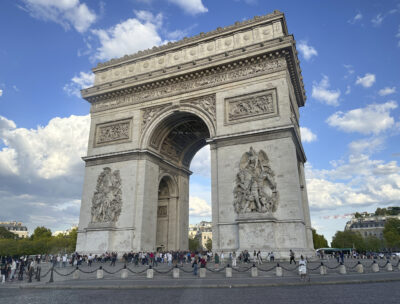
Arc de Triomphe
On Wednesday morning September 10th, the tour group returned home to New York. I stayed longer and had a few more days to myself. I switched back to my original little hotel because it’s located in the center of Paris.
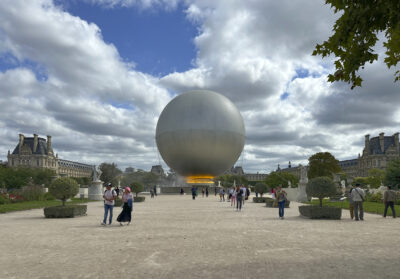
Olympic Cauldron at le Jardin des Tuileries
Metro Station
On my own again, I was able to see several more excellent small museums. One was the Musee des Arts de l’Asia de Ville de Paris. The museum was founded in 1898 by Henri Cernuschi. It had an amazing collection of ancient art from China, Japan, Korea, and Vietnam.
Musee Cernuschi
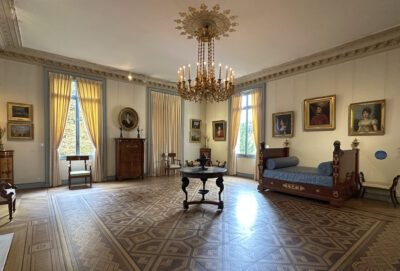
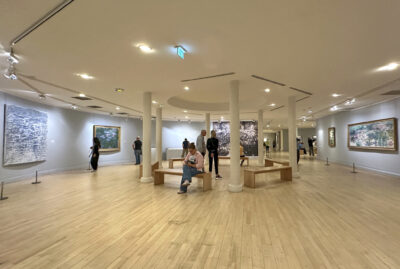
Another excellent museum was the Musee Marmottan Monet which has the largest collection of paintings by Claude Monet in the world. It also features works by Berte Morisot, Renoir, Manet, and other Impressionist artists. The museum also has a collection of beautiful Napoleonic-era furniture, paintings, and decorative objects.
Musee Marmottan Monet
Musee Marmottan Monet
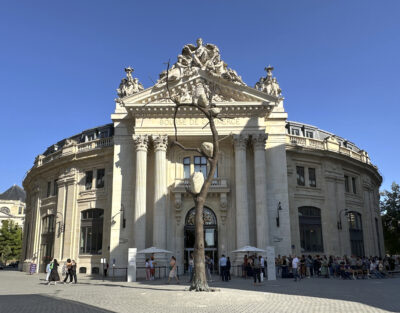
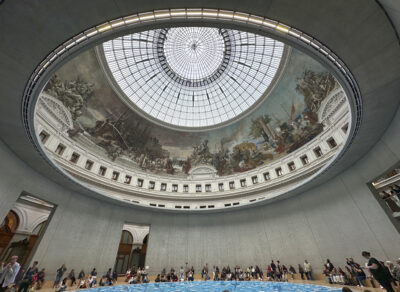
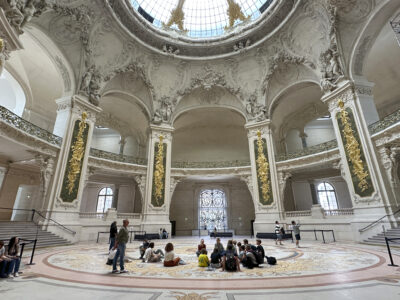
The Bourse de Commerce-Pinault Collection opened in 2021 as an exhibition space for contemporary art. The circular building from 1783 was originally used to store and sell wheat.
Bourse de Commerce
Dome in the Bourse de Commerce
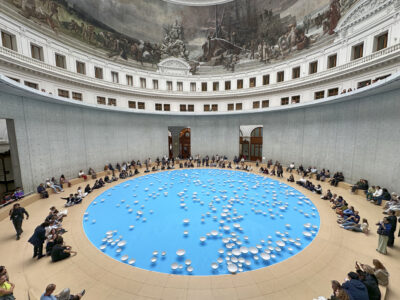
Contemporary Art Exhibit Under the Dome
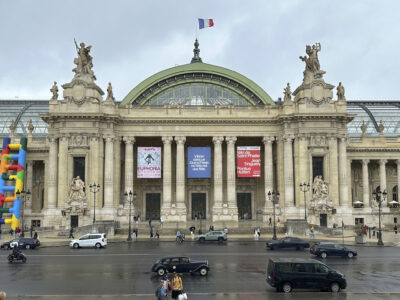
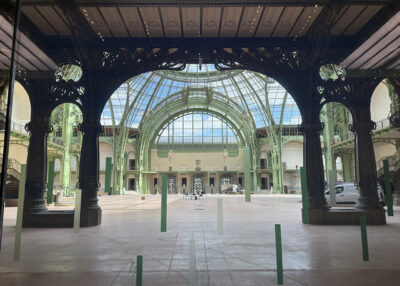
The Grand Palais is an exhibition hall and museum built for the Universal Exposition of 1900. Today it is used for contemporary art exhibits. I saw the Niki deSaint Phalle/Jean Tinguely exhibit.
Grand Palais
Exhibition Space in the Grand Palais
Grand Palais
Paris is fabulous! It’s a wonderful city to visit and I love to walk around any time, day or night.
June 5th, 2025 . Posted in London, United Kingdom | Comments Off on London – May 13-21, 2025
Jeff and I visited London in 2003, so we were overdue to see the British capital. After an easy overnight flight we arrived at Heathrow on May 13th. We took a taxi to our hotel, dropped off our luggage, and went out to explore the neighborhood.
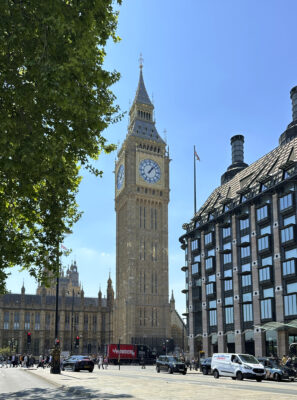
Big Ben
For this trip, we wanted to visit London’s wonderful museums and skip the typical tourist sights. Our first stop was the amazing Victoria & Albert Museum, one of our all-time favorites.
Victoria & Albert Museum
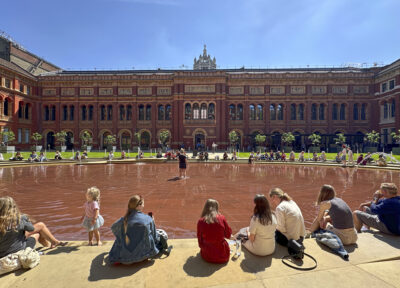
The V & A was officially opened in June 1857 by Queen Victoria. It’s one of the largest museums in the world with a vast collection of artifacts. It is impossible to see everything in one visit.
John Madejski Garden Pool
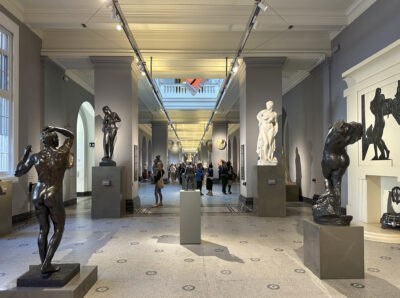
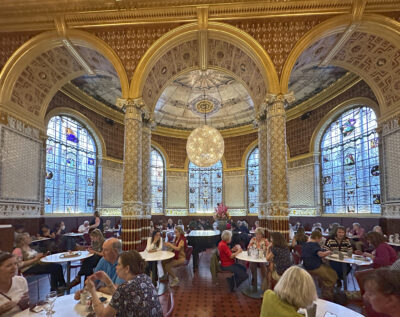
We saw art works from all over the world, including a Dale Chihuly glass sculpture hanging above the information desk. One room had casts of Michelangelo’s David and Donatello’s David among other sculptures. After walking around for a few hours, we had a delicious lunch in the ornately decorated cafe.
V & A Cafe
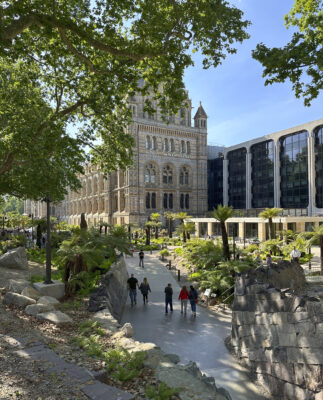
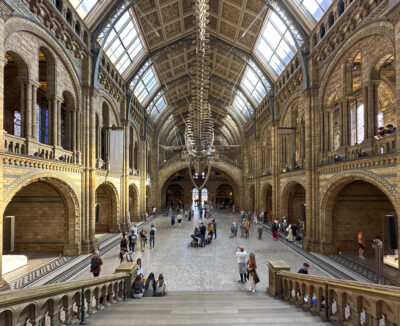
The Victoria & Albert is located across the street from the Natural History Museum. We read about the magnificent architecture of the building, so we walked over to take pictures of the impressive central hall.
Natural History Museum
Construction of the building was completed in 1881. The museum is the home of the Darwin Centre which has specimens collected by the scientist, Charles Darwin.
Central Hall of The Natural History Museum
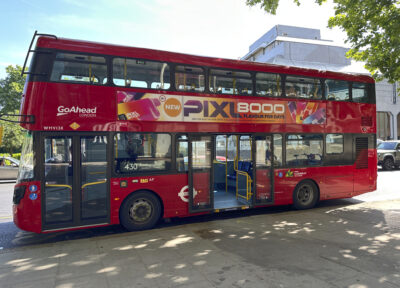
We enjoyed riding London’s double-decker buses. Traffic moved very slowly and there were many traffic lights, but sitting on the top level was fun.
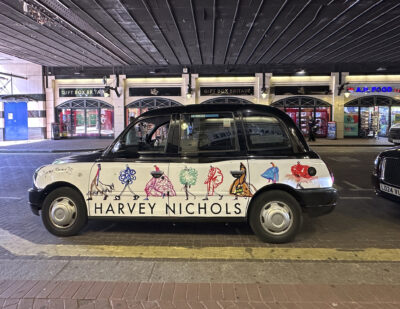
We rode in the iconic black taxis known as Hackney carriages. Originally horse drawn, these vehicles have been transporting Londoners since the 17th century. Motorized vehicles replaced horse-drawn carriages in the early 1900s. Today, most of the taxis are still painted black but many Hackney carriages have bright-colored advertisements printed on their sides.
London Hackney Carriage
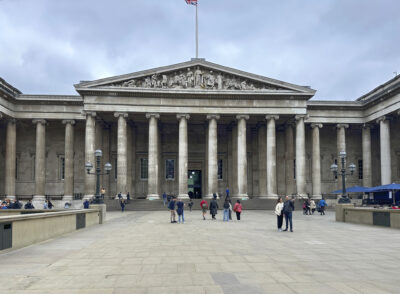
During the week, we also visited one of my favorite museums: The British Museum. It originally was a large private “collection of curiosities” owned by Sir Hans Sloane. The museum opened to the public in 1759.
Entrance to the British Museum
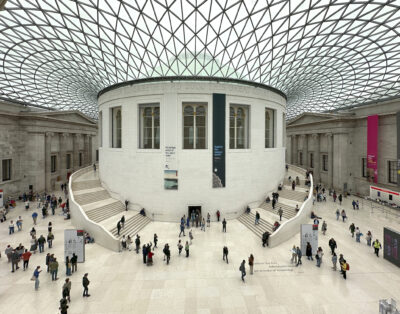
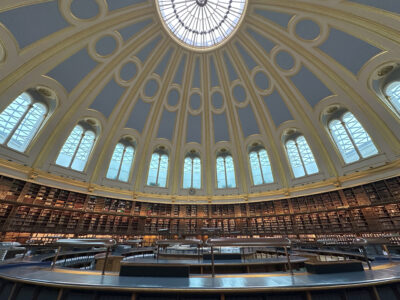
The permanent collection of eight million works makes it one of the largest museums in the world. The round Reading Room was opened in 1857 for researchers. It closed in 1997 with the opening of the new British Library.
The Great Court With the Round Reading Room
Today, visitors can walk through a small ground-level door to the Reading Room’s viewing area and imagine all the famous scholars who studied there.
Inside the Reading Room
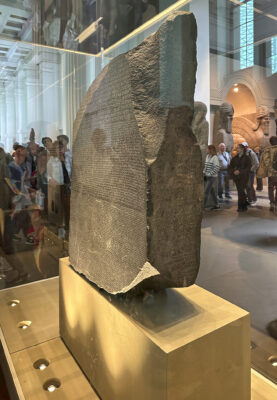
One of the most exciting artifacts at the British Museum is The Rosetta Stone. The stele is inscribed with similar texts written in Ancient Egyptian and Ancient Greek. The texts were key to begin to decipher Egyptian hieroglyphics by Jean-Francois Champollion in 1822.
The Rosetta Stone
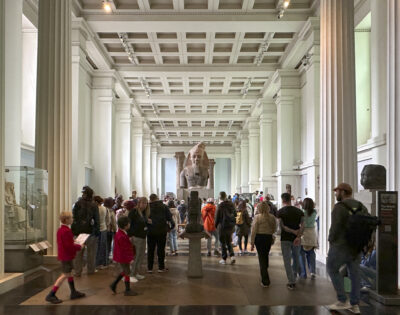
The Egyptian and Assyrian collection at the museum is wonderful. The statues and artifacts rival those we saw at the Egyptian Museum in Cairo.
Egyptian Wing
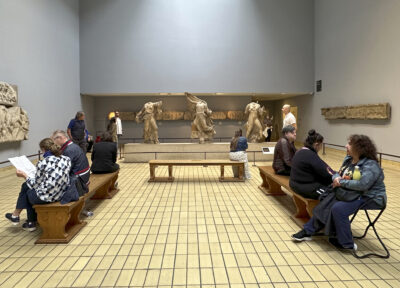
The British Museum is embroiled in a controversy regarding ownership of several important artifacts. Besides the Rosetta Stone which was found in Egypt, the Elgin Marbles, now referred to as the Parthenon Marbles, were removed from Greece.
Three Nereids – 385BC Greece
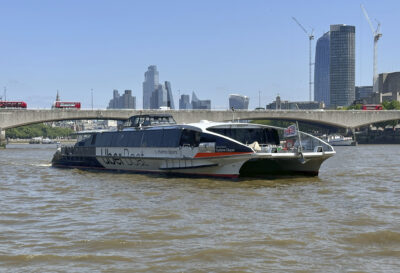
One day we rode an Uber Boat on the Thames River from Westminster to Greenwich. We wanted to see the sights from the river, but locals use Uber Boats for daily commutes.
Uber Boat on The Thames
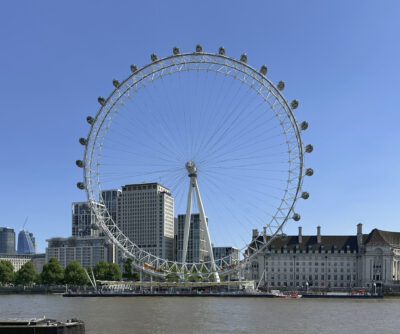
The London Eye is the world’s tallest “cantilevered observation wheel.” Originally called the Millennium Wheel when it opened in the year 2000, the structure is 443 feet tall. It looks like a giant bicycle wheel.
London Eye
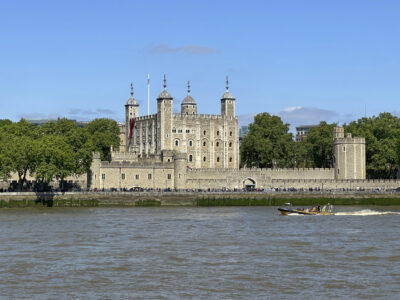
The Tower of London is an historic citadel and castle which was founded in 1066. It was used as a prison from 1100 until 1952. The complex also served as a royal residence during the 12th and 13th centuries.
The Tower of London
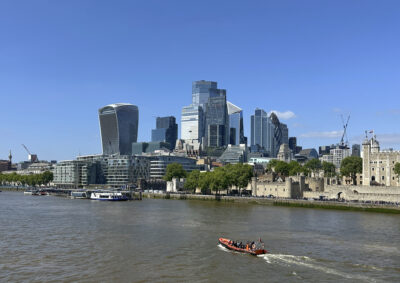
My photo below shows how modern London is creeping closer to the Tower of London.
Historic and New London
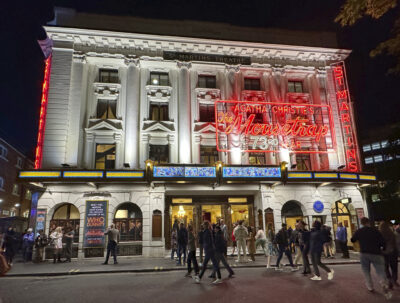
Since our hotel was in the West End, we saw two plays: “The Mousetrap” at St. Martins Theatre and “The Play That Goes Wrong” at the Duchess Theatre. Both were entertaining and a lot of fun.
St. Martins Theatre
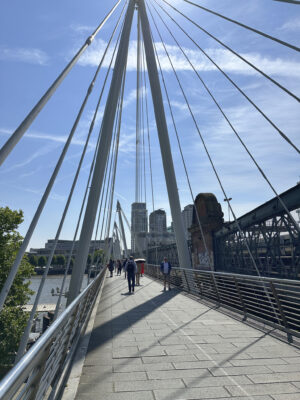
The weather was perfect all week: sunny and 50/60 degrees. Many pedestrian bridges cross the Thames River and both sides of the river are lined with excellent walkways with many benches.
Crossing the Golden Jubilee Bridge
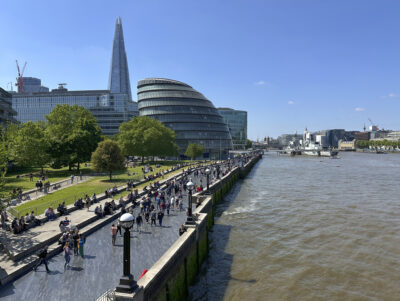
We crossed over to the Southbank to walk along the Thames. It was fun to people-watch and see the activities on the river.
Southbank Walkpath
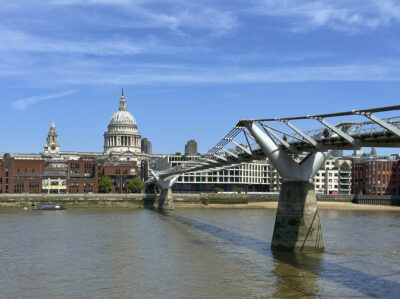
The London Millennium Footbridge opened in 2000. It’s nicknamed the Wobbly Bridge because of excessive swaying. It was closed for two years for repairs and design modifications. We walked across the bridge and didn’t feel any swaying.
Millennium Bridge
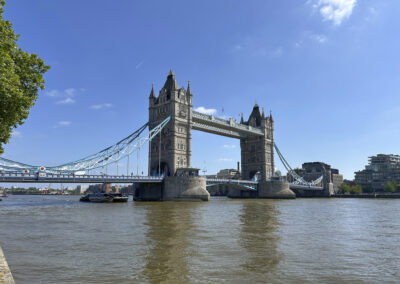
The beautiful Tower Bridge was officially opened in 1894. We crossed over on another beautiful sunny day.
Tower Bridge
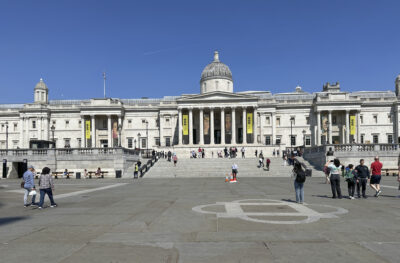
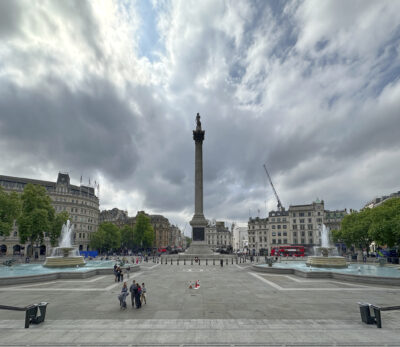
The National Gallery is located on Trafalgar Square. The museum has a wonderful collection of paintings dating from the 13th to 20th centuries.
The National Gallery
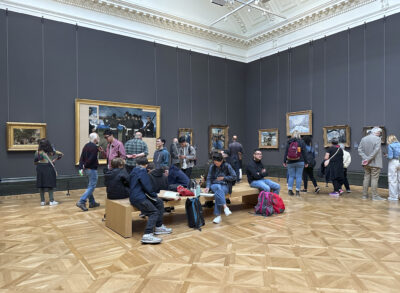
The collection at the National Gallery is relatively small but the artworks represent the major developments in Western painting.
Impressionists
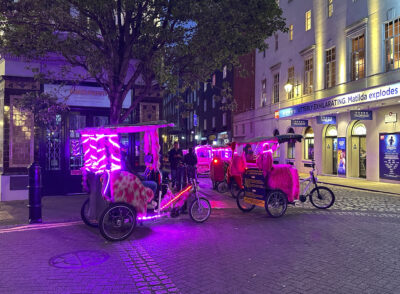
Something new since our last visit to London are the controversial Pink Pedicabs. One journalist wrote, “Wearing hot pink neon furs and year-round Christmas lights, they announce themselves by blaring ‘Dancing Queen’. They clump together at the end of streets causing a colourful blockage.”
Pink Fuzzy Pedicabs
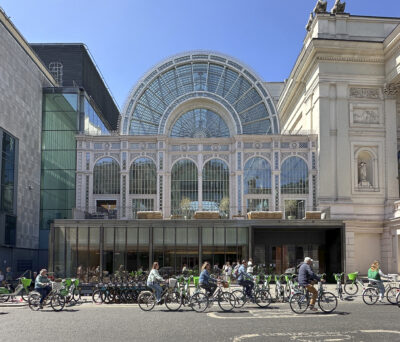
Our hotel was located in the West End of London, very close to Covent Garden, which has many restaurants and fun shops. This is also the location of the famous British Opera House.
Covent Garden Opera House
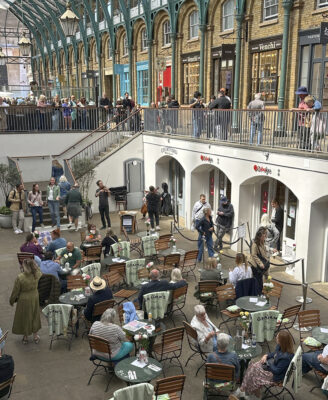
An open-air fruit and vegetable market has been part of Covent Garden since 1654. The enclosed Jubilee Market was built in 1904. It was renovated and reopened as a shopping center in 1987.
Covent Garden Market
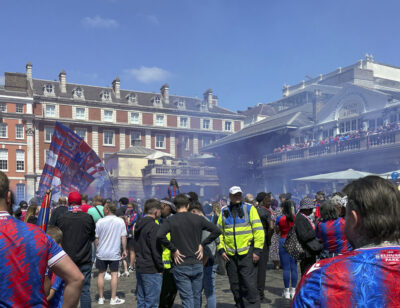
On Saturday, the city burst into life! Hundreds of Crystal Palace football fans flooded the streets of Covent Garden wearing their team’s colors of red and blue. They filled the pubs, waved flags, lit smoke bombs, chanted, and cheered.
Pre-football Celebration
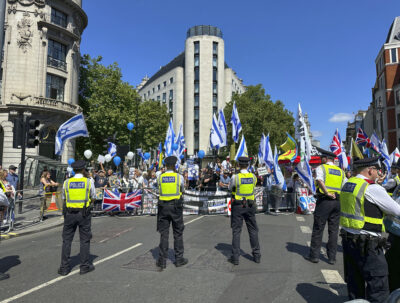
On The Strand, pro-Israel demonstrators peacefully sang songs and waved the Israeli flag.
Pro-Israeli Demonstration
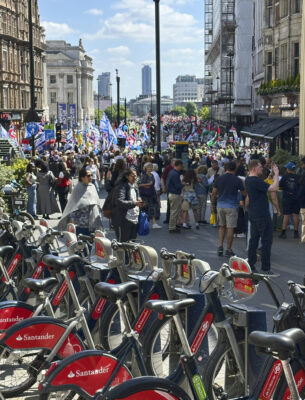
Nearby, Palestinian demonstrators marched up the avenue and past the Israeli demonstrators.
Pro-Palestinian Demonstration
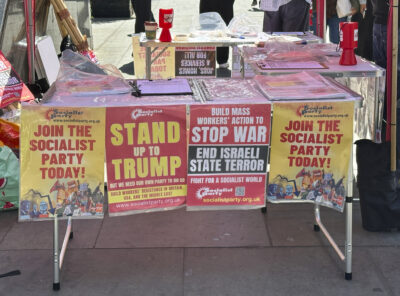
Political Parties set up tables near Charing Cross train station.
Political Table
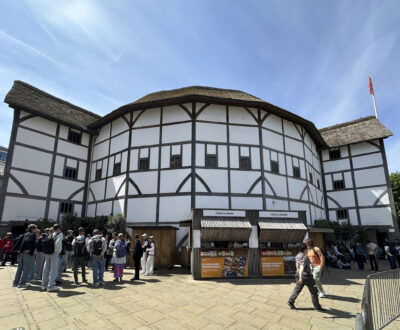
On another day, we walked to The Globe Theatre located along the Thames River. An open-air theater was originally built nearby in 1599. The current theater is a replica of that building and was constructed in 1997 to feature Shakespeare’s plays.
The Globe Theatre
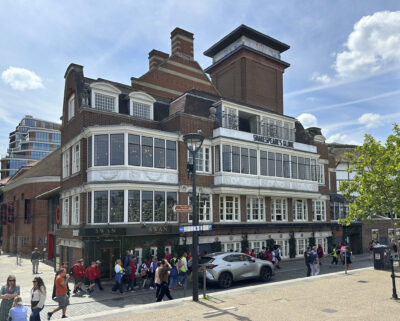
We had a tasty lunch at The Swan next door to the Globe Theatre.
The Swan
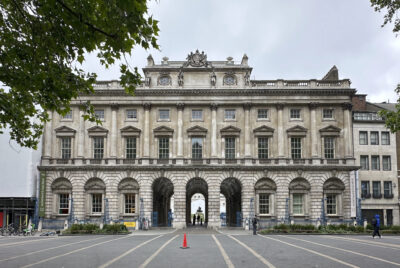
We also visited The Courtauld Institute of Art which is part of the University of London specializing in the history of art and conservation.
Courltauld Institute at Somerset House
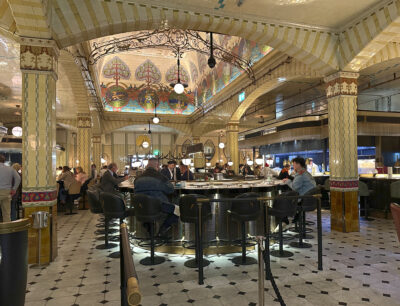
One afternoon, we rode a bus to Harrod’s Department Store. We explored the vast building, admired the huge food hall, and then had lunch at The Grill on Fifth.
Casual Dining at Harrod’s
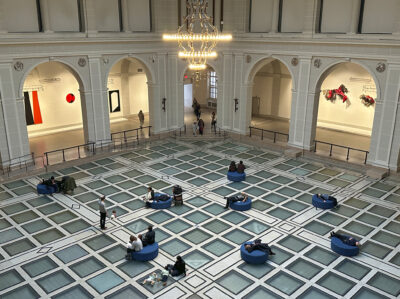
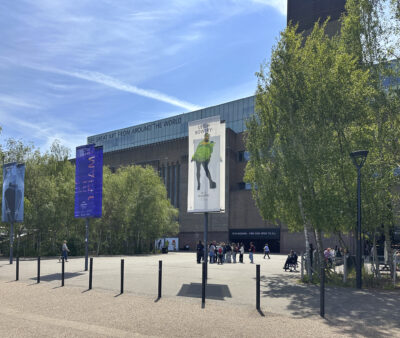
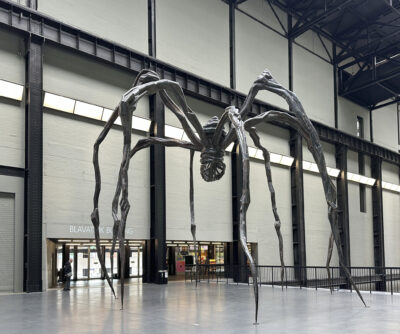
The Tate Modern is housed in a former electrical power station. The building was converted to a modern and contemporary art museum which was opened on May 11, 2000 by Queen Elizabeth.
The Tate Modern
Tate Modern is one of the largest modern art museums in the world. The vast building is impressive.
Louise Bourgeois’s “Maman”
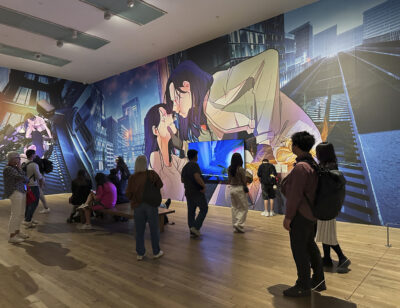
There were several contemporary art exhibits which enriched their modern art collection.
Anime Exhibit
Our week in London flew by! We had a wonderful time! We enjoyed exploring museums and neighborhoods in London. We ate very well – British, Chinese, Indian, Italian, etc. Next time we go to London, we’ll have to try riding The Tube.
March 20th, 2025 . Posted in Local Stuff, New York City | Comments Off on Visiting New York City – March 2025
I had to get out of suburbia and feel the exhilaration, joy, and excitement of The City. I made a reservation at the Park Terrace Hotel in Manhattan for a three night stay.
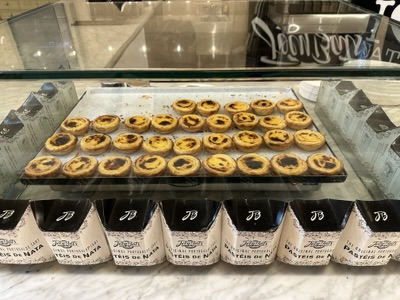
Joey Bats’ Portuguese Tarts in GCT
My son Chris met me at Grand Central Terminal where we sampled Pasteis de Nata custard tarts. Delicious!
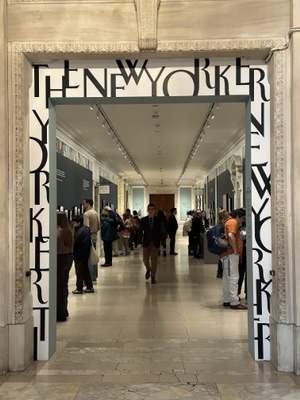
A Century of The New Yorker
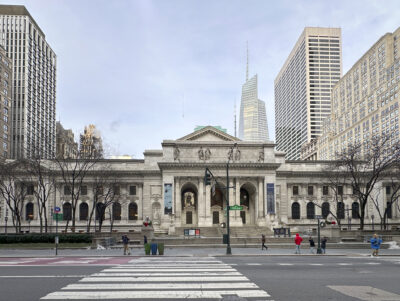
We stopped off at the Schwarzman Building of the NY Public Library to view the special exhibition celebrating the 100th Anniversary of The New Yorker Magazine.
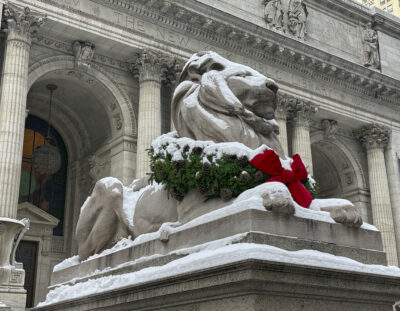
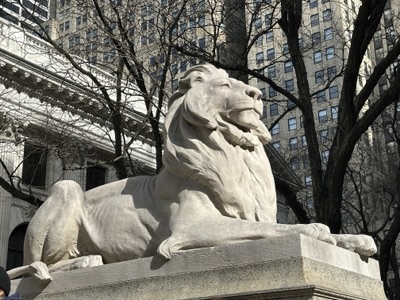
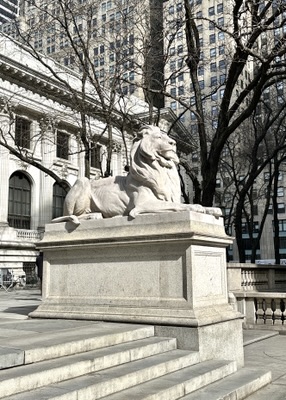
We said “Hello!” to Patience and Fortitude.
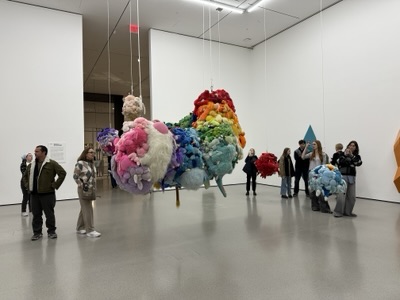
Contemporary Art
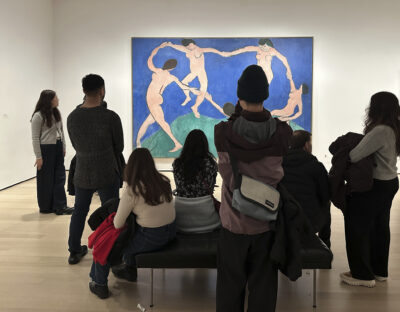
It was a pleasant walk uptown to MOMA – the Modern Museum of Art – to experience Christian Marclay’s fascinating exhibit simply called The Clock. It was amazing and indescribable in a few words!
Fifth Avenue
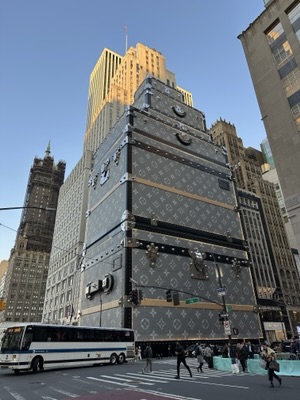
The Louis Vuitton flagship store looked like a huge stack of their famous luggage. It was built to camouflage ongoing construction.
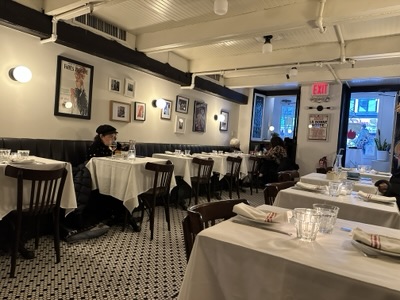
French Bistro
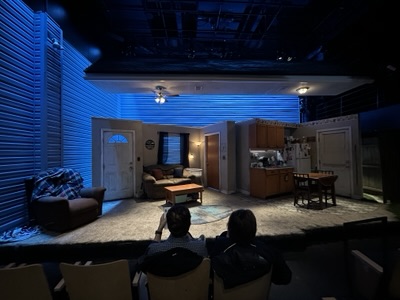
Dinner at Au Bonne Soupe on west 55th street before going to see the off-Broadway play “Amerikin” at 59E59 Theater. It was very good.
Amerikin Stage
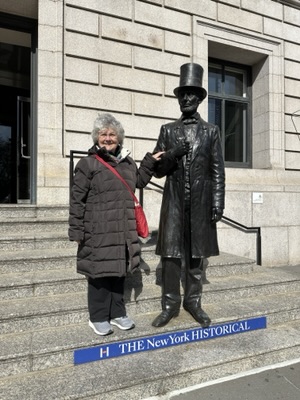
On Thursday March 13th, Chris joined me and we took a subway uptown to the N.Y. Historical to see their latest exhibits.
Me and Abe
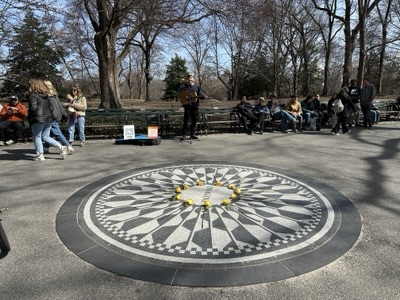
Unfortunately, a private event closed the museum to the public, but they gave us two free tickets to return on another day. After a tasty lunch at La Pecora Blanca on Columbus Avenue, we entered Central Park at 72nd Street and saw the famous Strawberry Fields memorial to John Lennon.
Imagine
There was a crowd of young people gathered around the flower-strewn “Imagine” memorial. They listened to a busker who was playing Beetles’ songs on his guitar.
The Strawberry Fields in Central Park
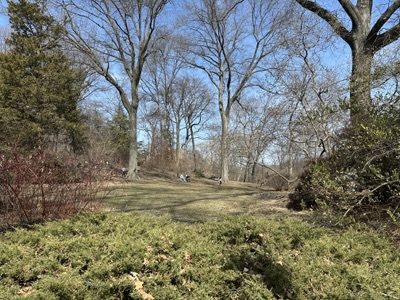
Chris and I walked through the park to the east side. Our goal was to find the beginning of a virtual tour of Christo & Jeanne-Claude’s Gates.
Virtual Gates
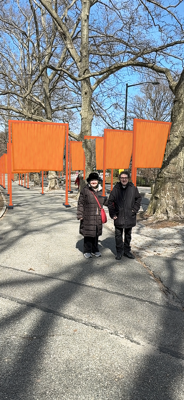
This year was the 20th anniversary of the artists’ monumental project which had rows of saffron-colored “gates” along several paths in Central Park in 2005.
The Gates
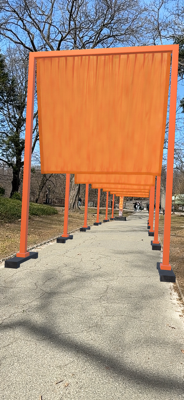
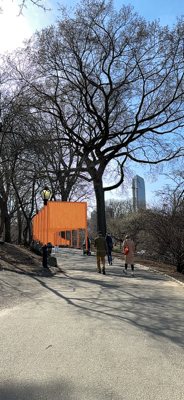
To celebrate, a virtual tour was created for smartphones where people walked along the same paths using the app as a visual guide. It was amazing!! I was able to take photos as if The Gates were really there!
Path of Gates
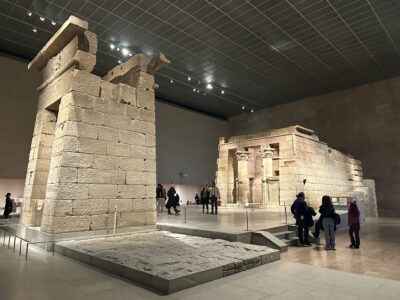
Afterwards, we went into the Metropolitan Museum of Art to see a current exhibit of landscape paintings. We enjoyed a tea break in the Patrons Lounge.
Patron’s Lounge
Later, we took a scenic bus ride down 5th Avenue and had dinner at one of my favorite restaurants: Franchia Cafe.
Franchia Cafe
Friday morning, March 14th, I crossed the street to see the “Treasures” exhibit in the NYPL building. The library rotates their Cabinet of Wonders of literary and artistic treasures regularly. Great stuff: Dickens’ desk, James Baldwin’s manuscripts, medieval atlases, Albrecht Durer prints, etc.
Fortitude
Afterwards, I walked to The Morgan Library on Madison and 36th Street. I wanted to see the two current special exhibits. One on the author Franz Kafka and the other exhibit was about the life of Belle da Costa Greene, the first director of the Pierpont Morgan Library.
Morgan Library
I met my granddaughter, Hannah at an Apple computer repair shop on 36th Street. She had a problem with her computer. Chris later joined us and we had a fun afternoon chatting.
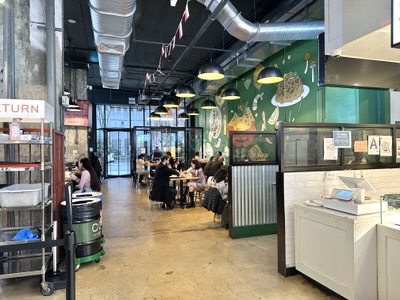
Chris and I walked up to west 50th Street to Urban Hawker’s for a casual dinner. Singaporean street food is represented by 17 vendors offering a variety of Asian cuisine.
Inside Urban Hawker
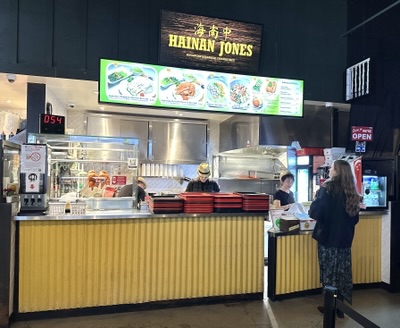
I had roast chicken from Hainan Jones and Chris had a tofu dish from Jakarta Munch. Both delicious!
Singapore Vendor
Chris walked me to the theater to see an off-Broadway performance of Perfect Crime. It was just okay.
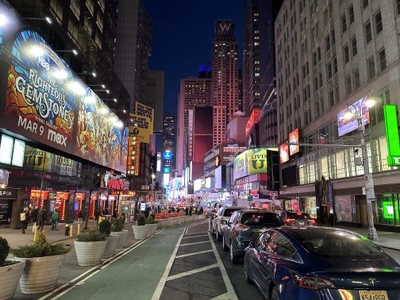
Broadway
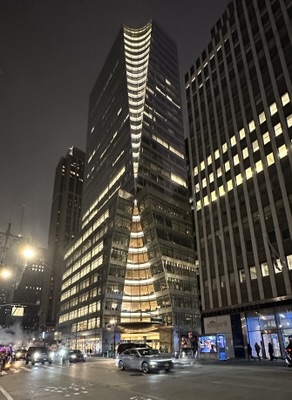
I enjoyed walking back to the hotel afterwards. It was fun seeing all the tourists and the lights of the city at night.
City Lights
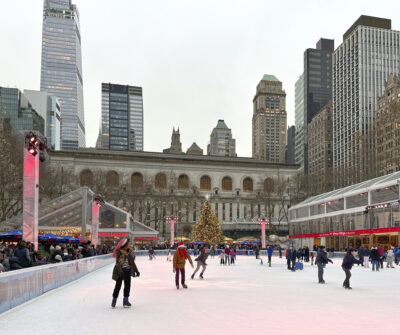
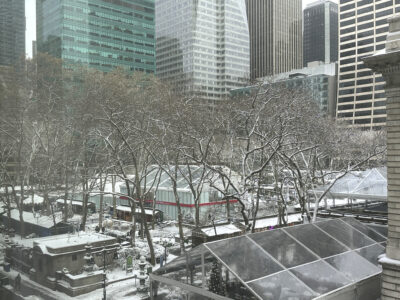
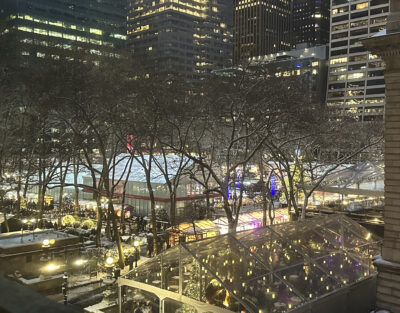
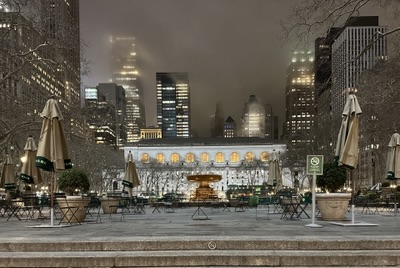
Bryant Park in Fog
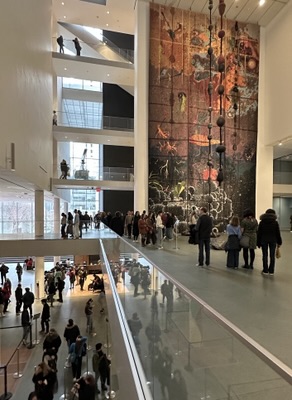
I got a late start on Saturday: relaxed, and enjoyed a couple of Nespressos in my hotel room. Hannah and Chris joined me for lunch at La Pecora Blanca on 40th Street before walking up to MOMA.
MOMA
Late in the afternoon, I rode a Metro North express train back to the boonies….
The next day, Sunday March 16, we had tickets for the Hudson Valley Irish Fest at the Paramount Theater in Peekskill, NY featuring my favorite Irish band: Cherish the Ladies!! 🍀