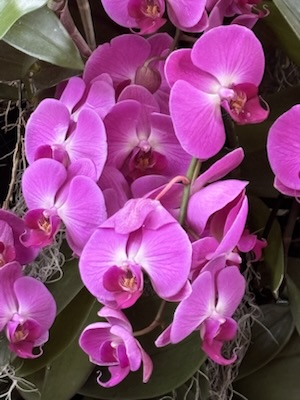
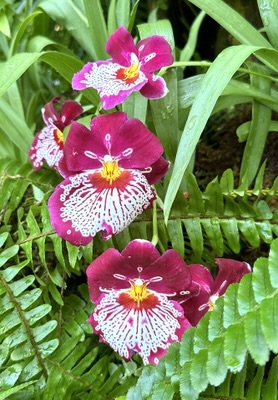
Jeff and I recently returned from a wonderful adventure to Japan. It was an “adventure” because we took a 15-day cruise across the Pacific Ocean and spent eleven days in Tokyo. Then we boarded another ship to cruise for 9-days around Honshu, the largest island of Japan, before flying home.
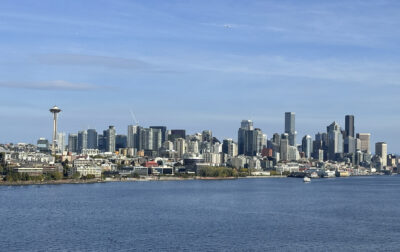
Our journey began on Saturday September 27th in Seattle Washington, a city we last visited in 2012. We flew there a day early to avoid any flight delays before our cruise and to see the city again.
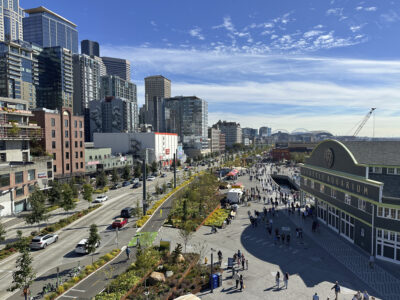
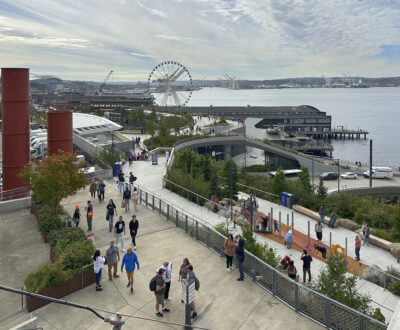
The beautiful waterfront has been developed and improved with a new Overlook Walk connecting Pike Place Market to the Seattle Aquarium. The Waterfront Pathway is a four mile long trail along Puget Sound where people can walk, jog, or bicycle with gorgeous views across the bay.
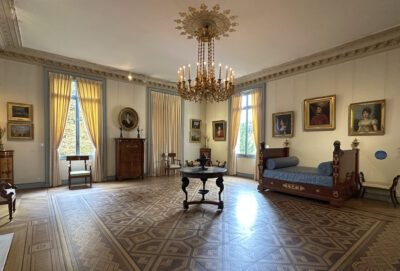
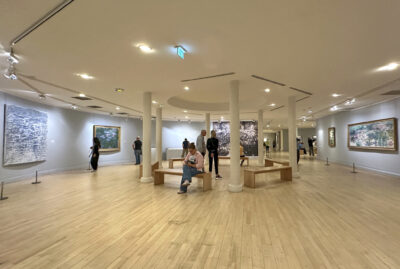
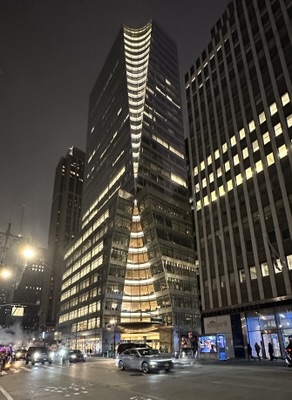
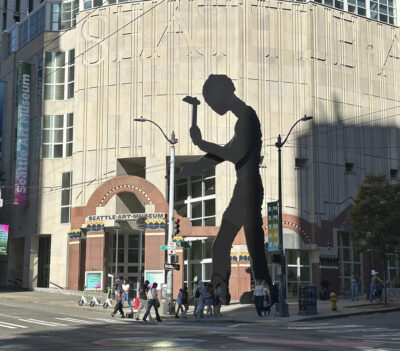
We visited the Art Museum and walked all over downtown Seattle. The city has many new tall modern buildings and there have been great improvements since our last visit.
We boarded the Discovery Princess on Sunday September 28th to begin a 15-Day re-positioning cruise across the Pacific Ocean. The ship sailed north to Alaska, then followed the shoreline of the Aleutian Islands, across the Bering Sea, and then southward to Japan.
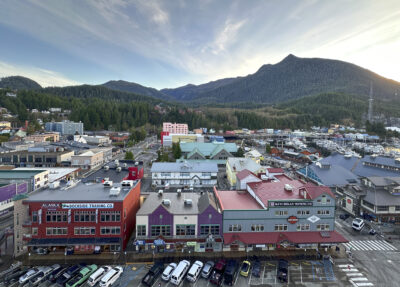
Our first port of call was Ketchikan, Alaska on the Inside Passage. This was our second visit to Ketchikan and both times we were very lucky to have sunny weather. Ketchikan is the “Rain Capital of Alaska” with an average of 12.5 feet of rain per year.
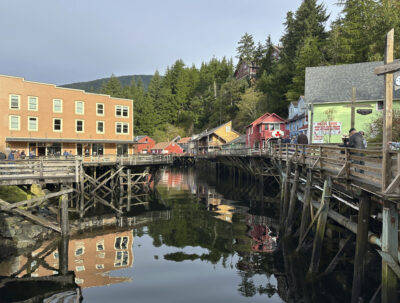
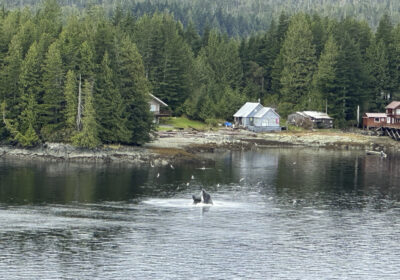
It’s a lovely community of friendly people and interesting shops. We had fun exploring the wooden walkway of Creek Street and watching the harbor seals in the water. From the ship, we watched a whale surface in the bay to catch fish. A flock of sea gulls followed.
Our next port was the Alaskan capital of Juneau. There are no roads leading into the city. The only access is by sea or air.
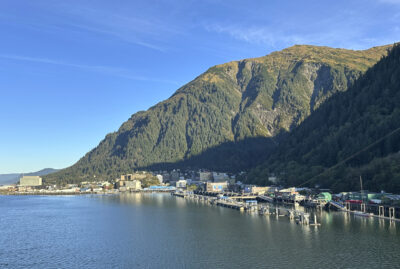
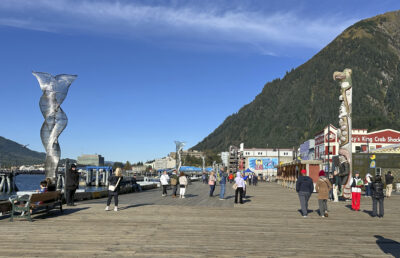
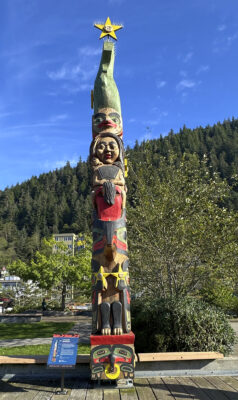
The ship docked near the center of town and we strolled along the waterfront boardwalk lined with totem poles. Juneau is a small city with government buildings, tourist shops, restaurants, and a museum.
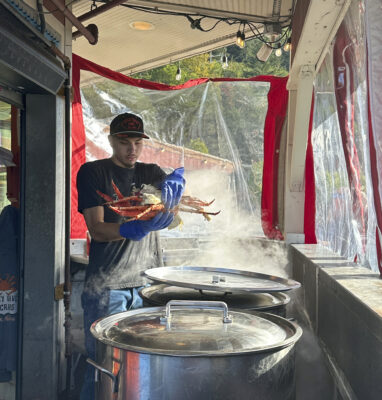
We looked in at Tracy’s King Crab Shack where they were steaming huge king crab legs for hungry cruise ship passengers.
The boardwalk is called the Kooteeyaa Deiyi Totem Pole Trail featuring unique poles which represent different clans and celebrate the history, identity, and living traditions of Alaska’s Indigenous peoples.
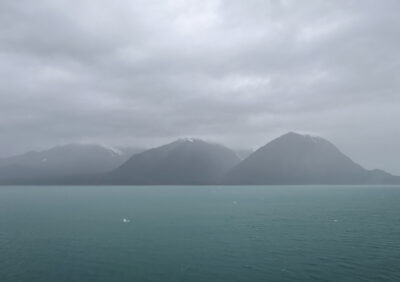
On October 2nd the Discovery Princess cruised past Hubbard Glacier in Yakutat Bay. This is a common Alaskan Cruise event and an awe-inspiring experience. As you approach the glacier, the water in the bay is a bright greenish color and icebergs become more numerous.
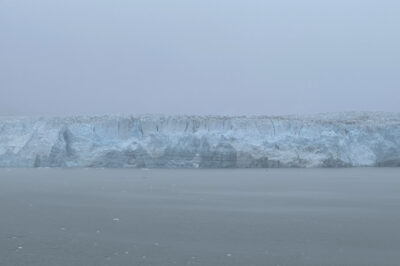
Hubbard is an active glacier almost seven miles wide where it meets the ocean. Its face is 400 feet tall and the icebergs which calve regularly from the face are 3 to 4 stories in height. A loud roar is heard when the glacier “calves” and a huge piece of ice splashes into the water.
The next day we arrived in Whittier, Alaska. The entire town is in the picture below. Almost all the residents (population: 272) live in the tall apartment building on the right of the photo.
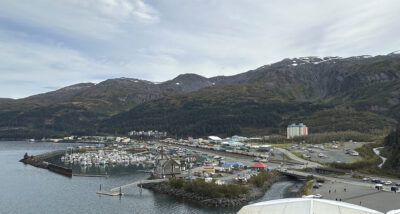
We walked along the waterfront passing the fishing boats in the marina. We found the tunnel which goes under the railroad tracks and connects the harbor to the residential building.
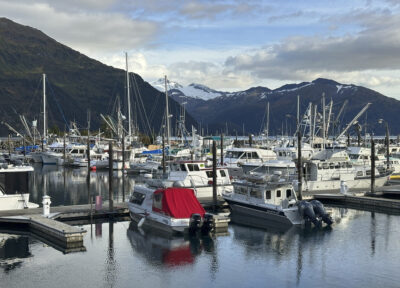
Whittier is a fishing village with shops renting kayaks, fishing gear, and hiking & mountaineering equipment. There was a quaint coffee shop called The Lazy Otter and, of course, a saloon.
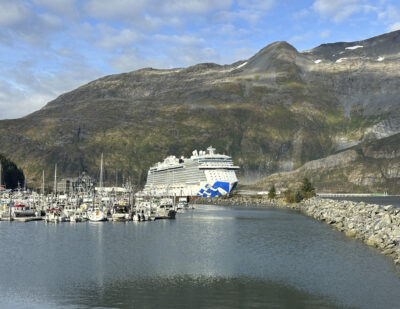
This was our last port until Tokyo. We had nine sea-days aboard the Discovery Princess between Whittier and Tokyo. As the ship cruised southwest along the Aleutian Islands, Captain Tony announced that if the weather became rough, the ship would seek refuge closer to the islands.
There’s always plenty to do aboard a ship on sea-days: exercise classes, Zumba, demonstrations, pools/hot tubs, bingo, enrichment lectures, gambling (for some people), movies, a book exchange, dance lessons, entertainment: singers & musicians, talks on a variety of subjects, special interest groups. I finished reading three books.
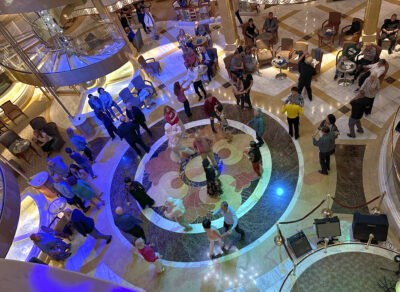
We joined a “progressive trivia” group where we played trivia every day and team scores were cumulative. There were 58 teams, the one with the highest score after 9 days was the winning team. At the end, our team called “The Golden Girls and Guys” tied for second place!! Yay!!
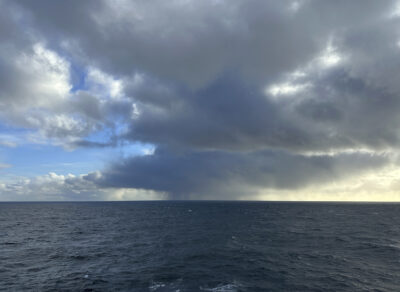
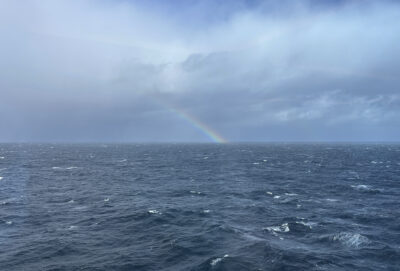
On our first night at sea, it was 39 degrees, the wind howled, it rained very hard, and the ship swayed from side to side. The motion didn’t bother us except we had to be careful walking around the ship and on the stairways. We went to a lecture given by a junior officer who said the ship’s stabilizers reduced the roll of the ship by 80%. Good to know!
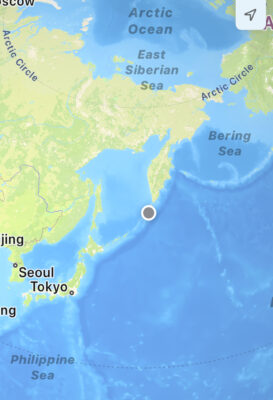
Captain Tony gave his daily reports: “Weather for the next 24 hours will be the same as the last 24 hours. High winds and rough seas.” He said due to the rough weather the ship would have to move slowly.
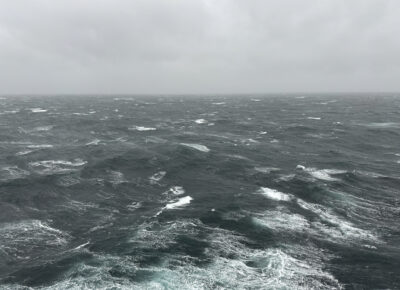
During one of Captain Tony’s reports he said that there was a second typhoon off the coast of Japan which was giving us bad weather. We later learned the winds had reached 110 miles per hour with 40 foot high waves.
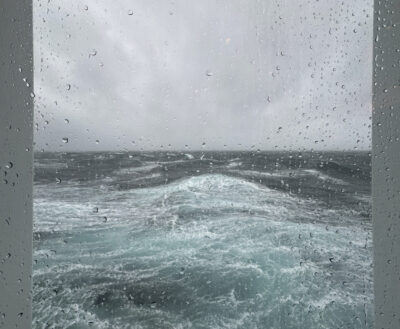
Early Tuesday morning October 14th we arrived in Tokyo, Japan. It was a cloudy 62 degrees, and it was good to finally set foot on land again.
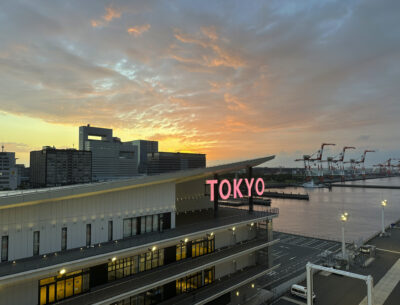
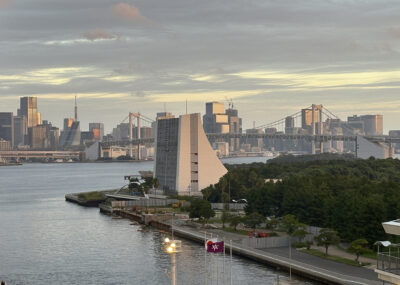
Greater Tokyo is the most populous metropolitan area in the world with 41 million residents. The city became the capital of Japan in 1868 and is located on the eastern coast of Honshu Island.
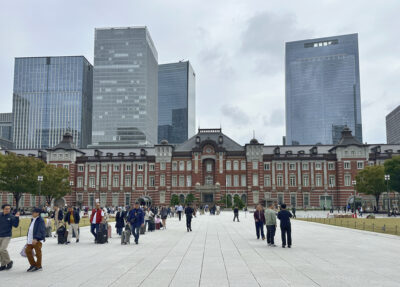
We took a taxi to our hotel which was located overlooking the historic Tokyo Train Station. The red brick station opened in 1914 and has been reconstructed and expanded over the years.
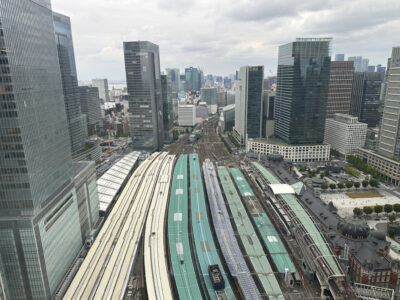
Tokyo Station is the busiest in Japan with more than 4,000 trains arriving and departing daily, including the famous Shinkansen high-speed trains.
On our last visit to Japan we saw the wonderful cities of Kyoto, Nara, Hakone, and Kanazawa. This time, we wanted to stay in Tokyo to see as much of the city as we could in 11 days on our own.
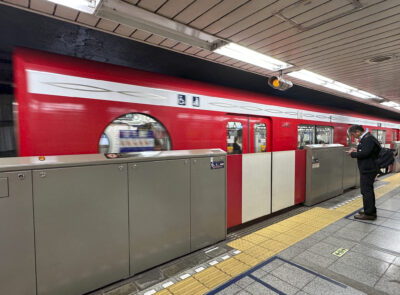
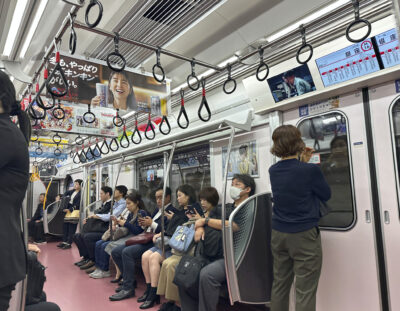
Public transportation in Tokyo is amazing! The station is served by regional commuter lines, Metro system, and the inter-city rail network. There is a multi-level labyrinth of tunnels connecting the trains. All the trains and tunnels were spotlessly clean, well lighted, and safe.
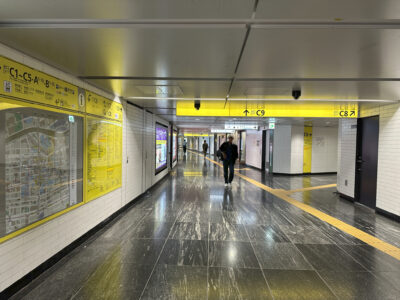
The stations had shops, convenience stores, restaurants, and services. The tunnels had good signs and maps directing pedestrians and the trains had printed signs in four languages explaining their routes.
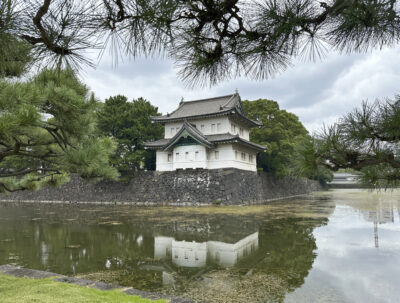
The Emperor of Japan lives in a palace located in the Imperial Gardens. The royal residence is not open to the public, however visitors can explore the beautiful Imperial Palace East Garden and the ruins of the Edo Castle, built in 1457.
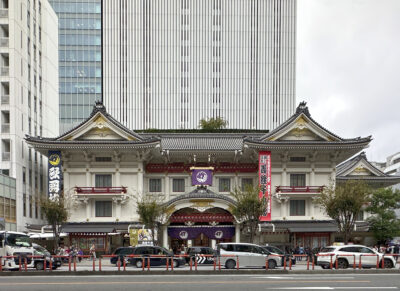
We went to the Kabukiza Theater to see a Kabuki performance. Kabuki is a classical Japanese art form known for its stylized dancing, acting, music, and elaborate costumes and makeup. A typical performance lasts four hours, but we bought one-hour single-act tickets. It was Wonderful!
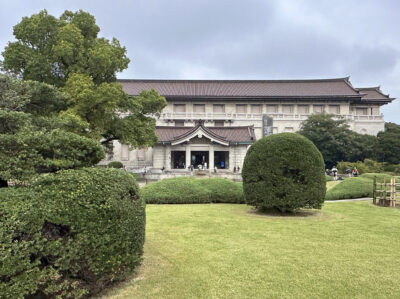
One rainy day, we went to the Tokyo National Museum in Ueno Park. The museum has an extensive collection of Asian art as well as ancient and medieval Japanese art. Some of the works are designated as National Treasures for their workmanship and importance of cultural history.
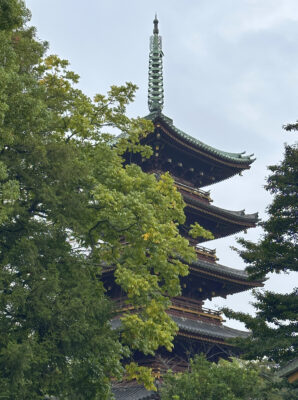
The Five-Story Pagoda is also located in Ueno Park. It was built in 1639 as a part of a Buddhist Temple complex.
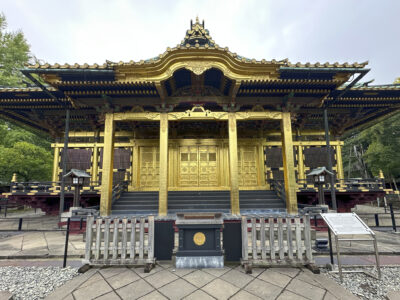
Nearby is the “golden temple” which is actually a Shinto shrine famous for its lavish gold leaf decoration. Established in 1627, the shrine is dedicated to the founder of the Tokugawa Shogunate.
Kinryu-zan Senso-ji also known as the Asakusa Kannon Temple is the oldest temple in Tokyo. The original Buddhist temple was founded in 628. The building was destroyed in WWII and rebuilt in 1958.
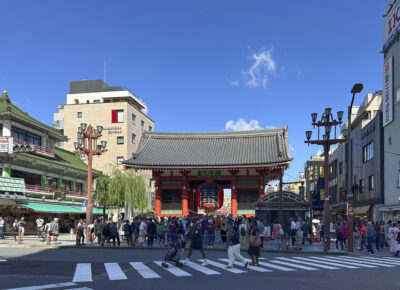
The Kaminarimon or “Thunder Gate” is the first gate leading to the Senjo-ji Temple complex. It features a massive paper lantern in the center. Four statues representing Shinto and Buddhist gods guard the gate.
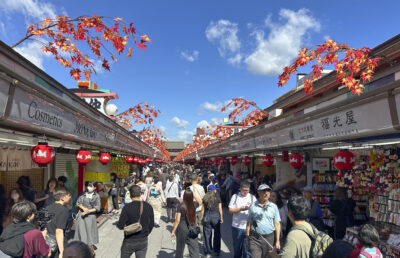
After passing under the huge lantern of Thunder Gate, visitors are on Nakamise-dori which is a long narrow shopping street full of small stalls selling souvenirs, snacks, traditional sweets, and t-shirts.
Outside the temple, tourists traditionally have their fortunes told for 100 Yen. Fortunes are written in Japanese and English. If it’s a bad fortune, tie it to the nearby wire rack. If it’s a good fortune, take it with you.
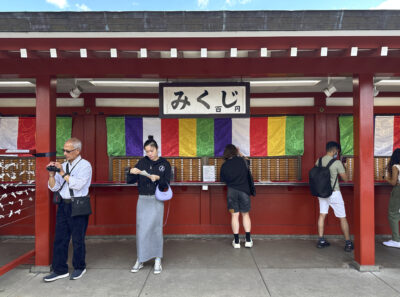
There is a particular etiquette at Japanese Shrines and Temples: first wash your hands; stop at the incense burner for good health or wisdom; place offerings in the box; ring the bell two or three times; bow twice; clap twice; pray and remember to thank the gods; deeply bow again.
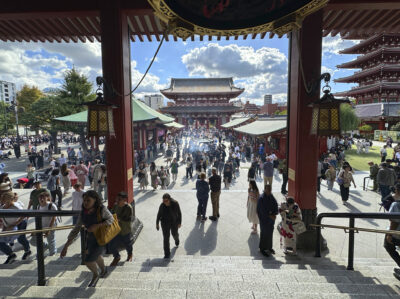
Shibuya Crossing is the world’s busiest pedestrian intersection with as many as 3,000 people crossing the street during a single green light. We went twice: at night and in the afternoon. It was crowded both times!
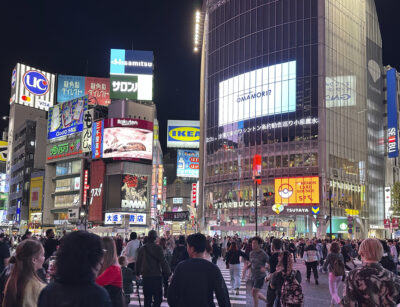
Shibuya is a major commercial shopping and entertainment district.
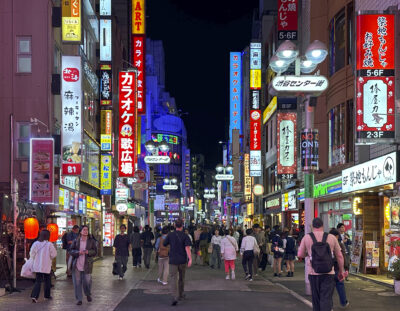
We walked about 6 miles every day during our stay in Tokyo taking trains everywhere.
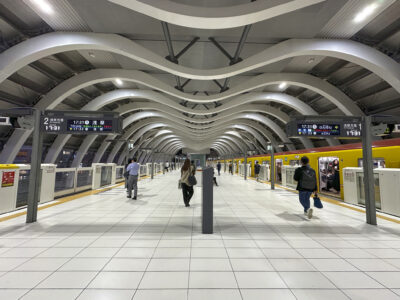
The Meiji Shrine’s torii gates are large wooden “gates” that mark the entrance to the sacred grounds. They are made of 1,500-year-old cypress wood and symbolize the separation between the secular world from the divine.
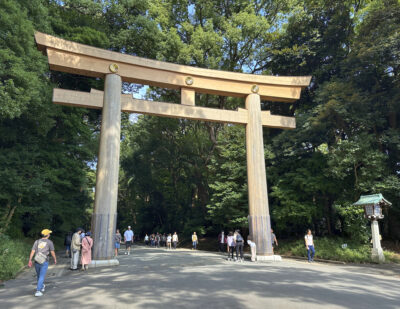
The Meiji Jingu Shrine is a Shinto shrine dedicated to the Emperor Meiji and his wife, Empress Shoken. The original shrine was completed in 1921 and rebuilt in 1958.
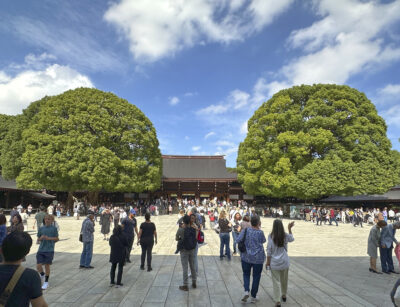
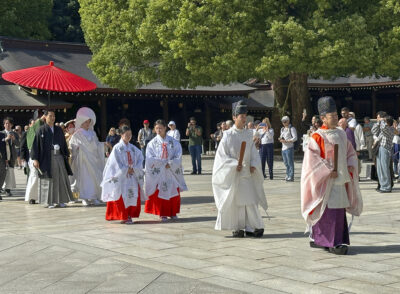
Weddings at Meiji Shrine are traditional Japanese Shinto ceremonies. We were lucky to see a wedding procession of priests, shrine maidens, the bride and groom, and the couple’s family and friends.
On another day, we took the train to Nezu Shrine. It’s a Shinto shrine located in a residential neighborhood. It was established in 1705 and is described as “Tokyo’s most beautiful shrine.”
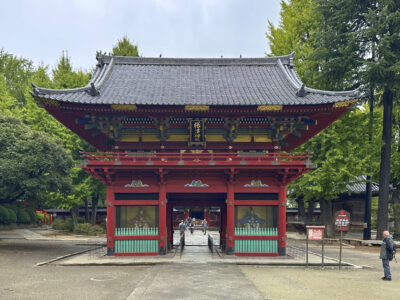
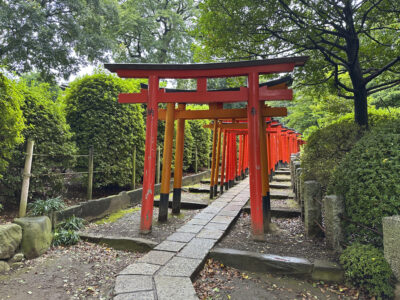
One of the most famous features of the the shrine is the “path of vermillion torii” across the hillside. In the middle of the path there is a viewing platform over a pond which overlooks the main shrine.
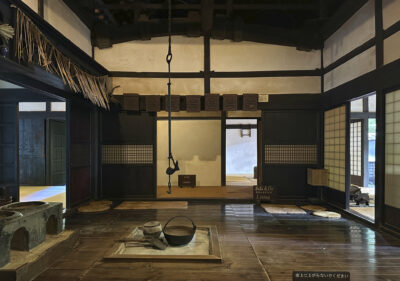
We took a train to the wonderful Nihon Minka-en, Japan Open Folk House Museum, located in the city of Kawasaki. This is a collection of 25 traditional farm houses from various regions of Japan which were built during the Edo Period 1603 – 1868. The houses were relocated and reconstructed to show the lifestyles of the former residents.
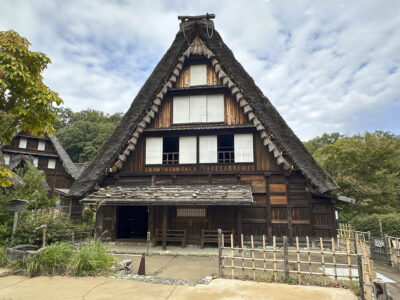
The Yamashita House is a historic gassho-style farmhouse which was originally built in the early 1800s. Today it houses a traditional soba restaurant called Shirakawagou which serves hot and cold soba (buckwheat) dishes.
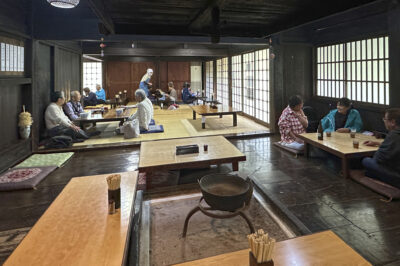
There were traditional farmhouses, samurai houses, merchant houses, homes from fishing villages, a water mill, and a shrine. During the year there are festivals and traditional handicraft demonstrations.
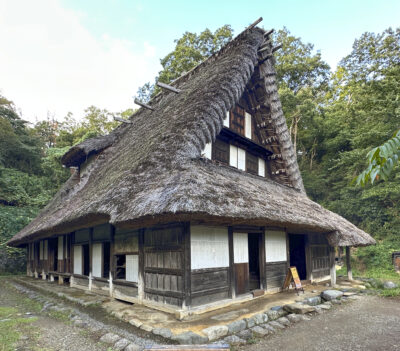
The houses are listed as Important Cultural Properties of Japan. The interiors of the farmhouses were as varied as the houses. They reflected the time of construction, the region of Japan where they were built, and occupations of the owners.
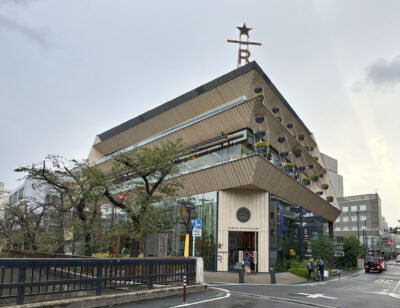
There are six Starbucks Reserve Roasteries in the world and one is located in Tokyo. They feature in-house roasting of specialty coffees, bakery items, and sandwiches. We had to visit the one in Tokyo!
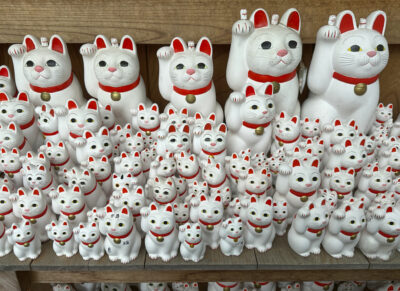
Gotokuji Temple is a Buddhist temple which originated the “beckoning cat.” The legend is that the cat saved a feudal lord by beckoning him into the temple to shelter from a storm. Today people believe the cat statues bring prosperity and good luck.
On Saturday October 25th we checked out of our hotel in Tokyo and went to the Yokohama cruise port to board the Diamond Princess ship to cruise around Honshu Island to visit cities on the western coast of Japan.
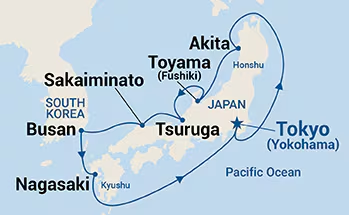
It was windy and raining during our first night and day aboard the Diamond. The plan was to have one “sea day” between Tokyo and Akita, however the winds were so strong that the port of Akita was closed to ships, so we had a second “sea day.”
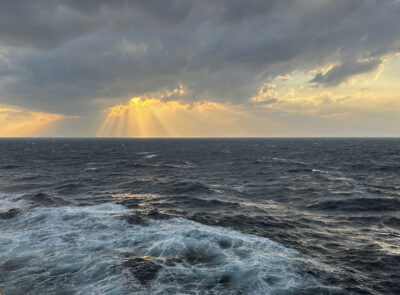
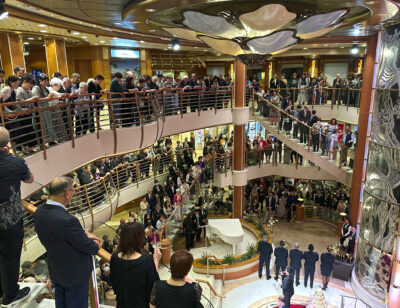
The Diamond Princess cruises mainly in Asia with frequent departures from Japan, so it was no surprise that most of the passengers on the ship for this cruise were Japanese.
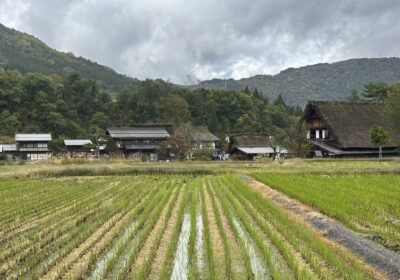
On Tuesday October 28th the ship docked in the city of Toyama. We booked an excursion to visit the historic village of Shirakawa-mura, which means White River Village. It is a UNESCO World Heritage Site known for its buildings with steep thatched roofs called gassho-zukuri.
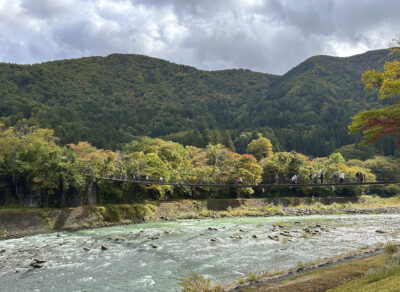
It is a working agricultural village of approximately 1,600 people surrounded by mountains. People continue to farm and live in the traditional houses. The farmhouses were built in the 1800s without nails.
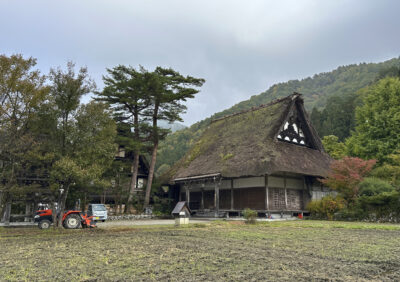
A few of the historic houses were open to the public as museums. Some other buildings were used as restaurants or shops.
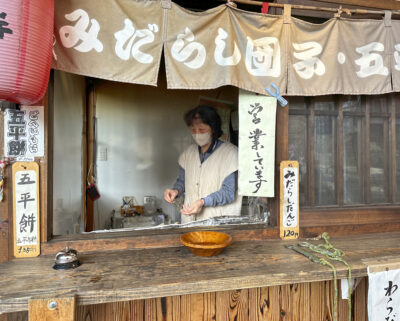
We stopped for a snack at a small window where a woman was cooking Gohie mochi. It was made from pounded rice, that is grilled and coated with a miso glaze. It originated as a portable food for mountain workers and foresters.
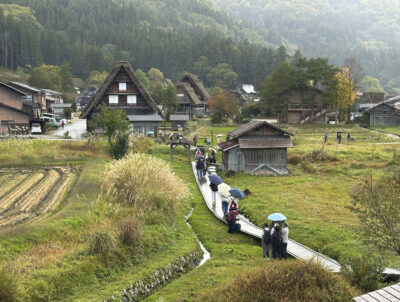
It rained on and off the day we visited. Shirakawa Village is known as one of the snowiest places in Japan with an average yearly snowfall of 32 feet. The thick thatched roof of the gassho-zukuri houses were created to deal with heavy snow.
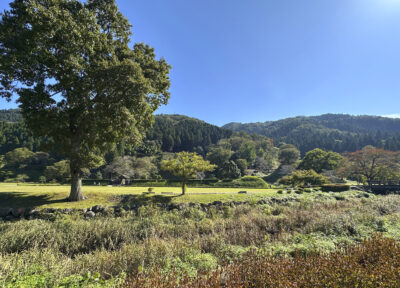
On Wednesday October 29th the Diamond Princess docked at the port of Tsuruga. We first visited the Ichijodani Asakura Family Historic Ruins. The Asakura samurai clan controlled the region for one hundred years. Several houses have been reconstructed to show how the people lived during the 15th century.
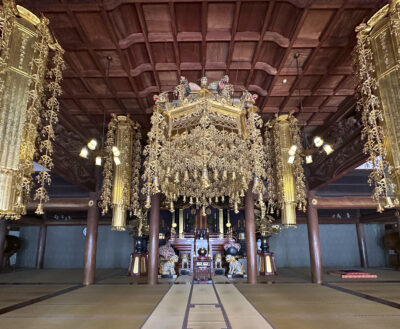
We also visited the Eihei-ji Temple, which is one of two main temples of the Soto School of Zen Buddhism. The name means “temple of eternal peace.” It is located on the side of a mountain and the gardens were incredibly beautiful.
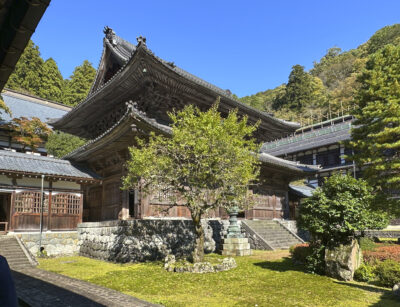
The founder, Eihei Dogen, brought Soto Zen from China to Japan in the 13th century. The oldest structure standing today dates from 1794. The temple is a training monastery with more than 200 monks and nuns in residence.
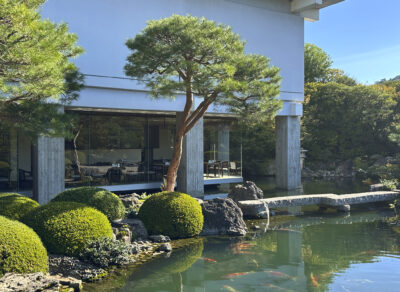
Thursday October 30th the ship docked at the port city of Sakaiminato. We had an excursion to visit several sights in the area. We first visited the beautiful Adachi Museum of Art and Gardens.
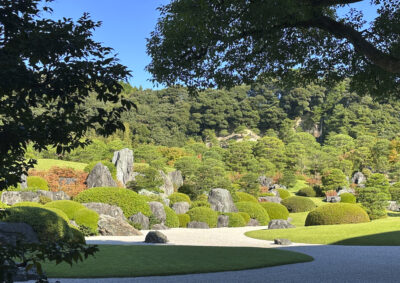
The museum was founded by Adachi Zenko to house his private art collection and feature artworks of notable Japanese artists. He also wanted visitors to experience the sublime beauty of Japanese gardens.
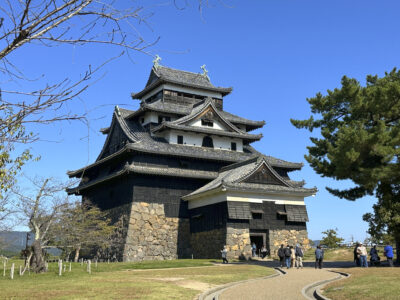
We visited Matsue Castle which was constructed in 1611. It is one of the few remaining feudal Japanese castles whose keep is in its original wooden form. The large tower has survived earthquakes, fires, and wars.
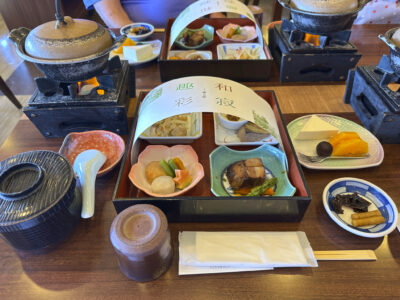
After visiting the castle, we went to Yuushien Garden which is located on Daikonshima Island in the middle of a lake. There we were treated to a special kaiseki luncheon at the Zen Restaurant. This is my favorite type of Japanese food. A variety of delicious morsels are beautifully arranged on small plates.
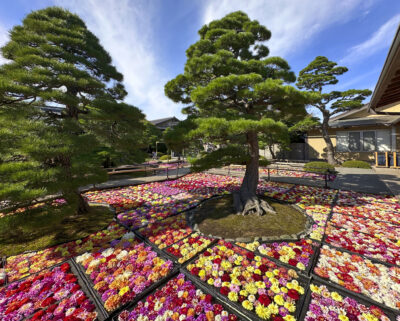
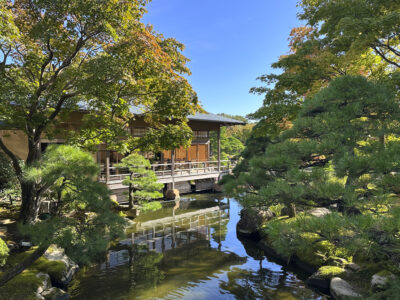
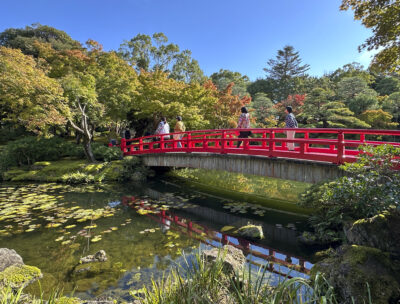
Yuushien Garden is famous for growing Korean ginseng and beautiful Japanese peonies. After lunch, we walked around the gorgeous gardens which were full of beautifully arranged exotic plants and trees.
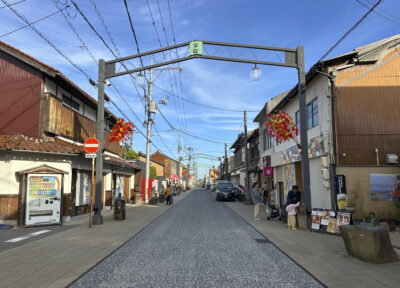
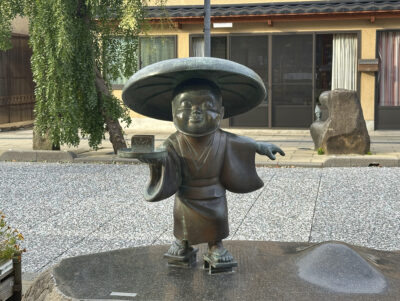
Our last stop of the day was a visit to Mizuki Shigeru Road, which honors the birthplace of manga artist Mizuki Shigeru. The street is lined with over 170 bronze statues of his characters. The shops, eateries, and bakeries along the street are all decorated with his Kitaro themes.
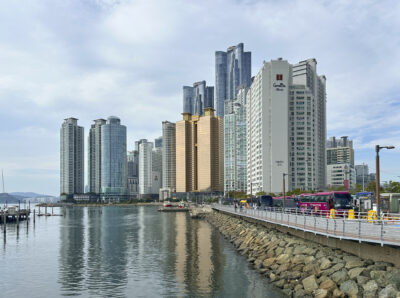
Friday, October 31st we docked in the port city of Busan, South Korea, which is the second largest city in Korea after the capital, Seoul.
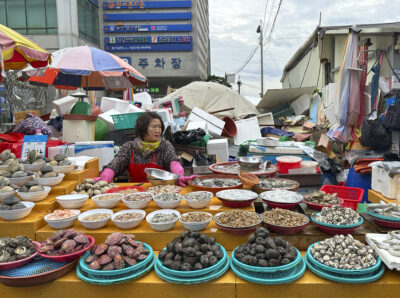
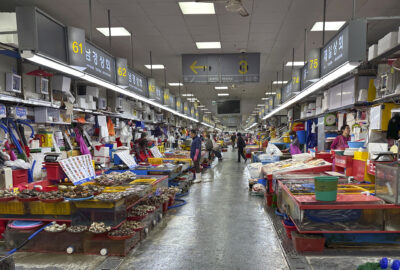
The Jagalchi Fish Market is a huge seafood market. It is known for the majority of female fishmongers who historically sold seafood at the market.
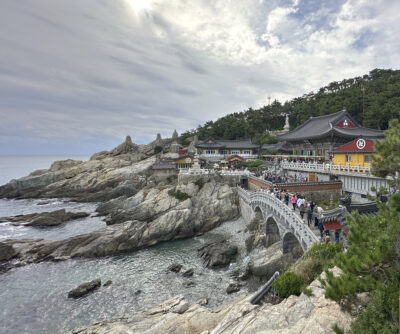
Haedong Yonggung Buddhist Temple is a large religious complex along the rocky coast. The first temple was built on this site in 1376. Recently, the temple was rebuilt after a fire in the early 1930s.
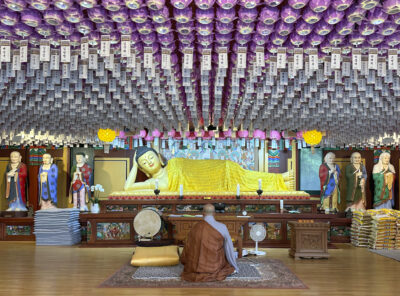
Many people visit the temple to have their wishes granted and there were many opportunities to leave donations.
Busan is a vibrant modern city known for its beaches, mountains, sporting events, the Jagalchi Fish Market, street food markets, and cultural attractions.
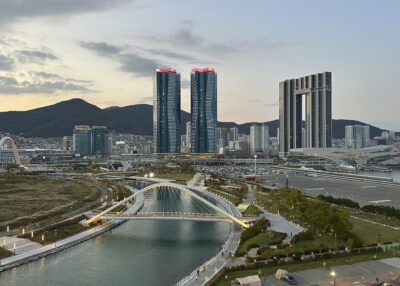
We visited several huge outdoor street and covered markets. The local guide led us up and down the streets and alleyways of the markets where food and all kinds of goods were offered for sale.
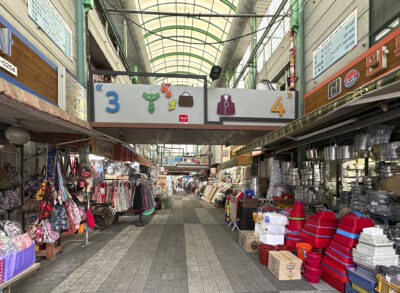
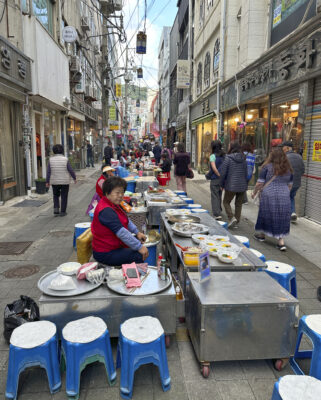
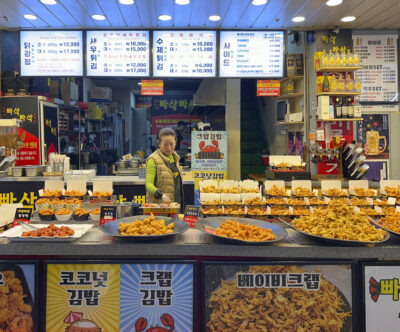
We saw as much of the city as we could in one full day with a local tour guide. South Korea has a long and complicated history but Busan looked like it was surging into the future.
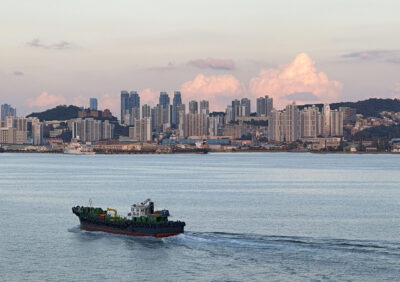
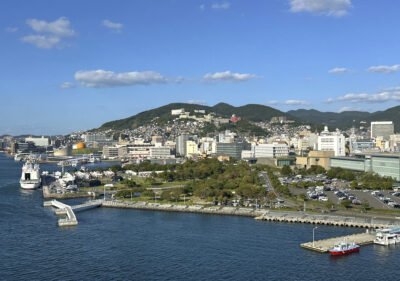
Saturday November 1st, Diamond Princess traveled overnight from Busan to Nagasaki, Japan. We decided to have a restful day in Nagasaki, so we explored a bit of the city on our own. Public transportation is easy in Japan so we used our Suica cards on the trams to go the center of the city.
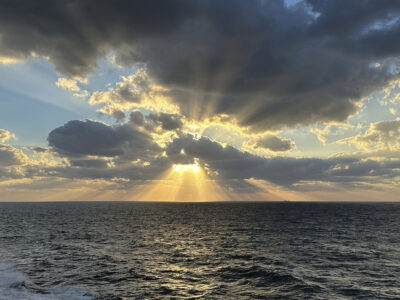
We had one more “Sea Day” aboard the Diamond Princess between Nagasaki and Tokyo. It was 70 degrees and calm seas so we enjoyed our last day of cruising.
At dawn on Monday November 3rd we arrived in the port of Yokohama on Tokyo Bay. We were packed and ready to go to Haneda Airport, one of Tokyo’s major international airports.
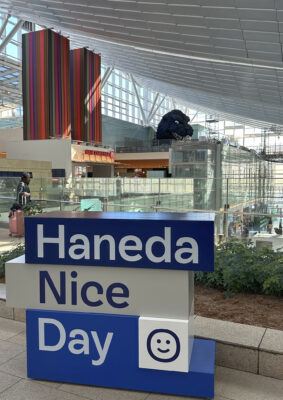
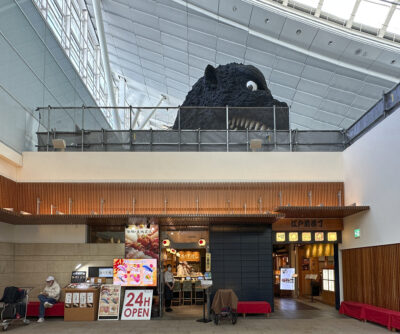
In typical Japanese style, Haneda was a fun place to wait for our flight. There were many interesting shops, restaurants, and snack bars to help pass the time.
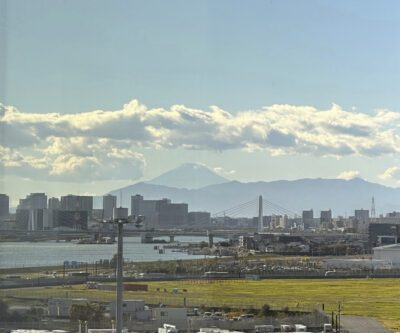
It was a clear sunny day in Tokyo and from the lounge at the airport, we saw Mount Fuji in the distance beyond the mountains. What a thrill. At 12,389 feet, Fujiyama is an impressive sight.